
Literary Theme Lesson: Taking a Stand—Empower Students With ‘Liberation Summer’
Teaching Theme with ‘Liberation Summer’
This theme lesson will help your students determine the theme of the story by starting with the basic, concrete details of reading comprehension—setting, characters, and plot. They’ll also begin to grapple with the overarching question of how a person develops his or her identity, values, and beliefs while reading Liberation Summer.
Suggested Grade Levels: 4–6
Liberation Summer is the powerful story of a young man who learns about an injustice and decides to take a stand, despite the obstacles. It’s based on real events from the author’s life.
The protagonist, Jayden, is a young adult who learns about the cruelty of factory farming and the existence of food deserts in low-income communities. This inspires him to make positive changes for animals and his fellow humans. His actions cause readers to consider at what point an individual should take a stand against injustice.
Students will also be exposed to the idea of what it means to show courage. Liberation Summer will inspire students to have discussions at a deeper level and understand the power of showing courage to fight for the things they believe in.
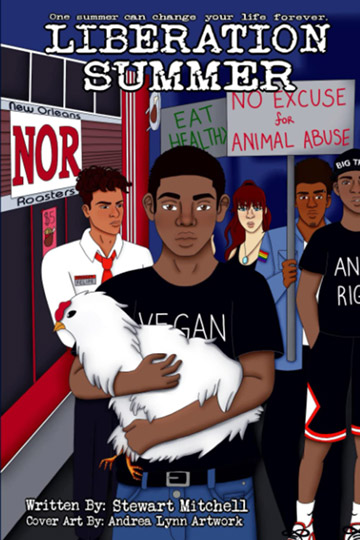
Use the activities below to study the theme of Liberation Summer—and to address the following Common Core standards for reading literature:
- CCSS.ELA-LITERACY.RL.5.1
Quote accurately from a text when explaining what the text says explicitly and when drawing inferences from the text.
- CCSS.ELA-LITERACY.RL.5.2
Determine a theme of a story, drama, or poem from details in the text, including how characters in a story or drama respond to challenges or how the speaker in a poem reflects upon a topic; summarize the text.
- CCSS.ELA-LITERACY.RL.5.3
Compare and contrast two or more characters, settings, or events in a story or drama, drawing on specific details in the text (e.g., how characters interact).
Preview the Book
- What is the title?
- Who is the author?
- Based only on the title, images on the front and back cover, and the blurb on the back, what do you think will happen in this story?
- Think of 2 questions you have about the book that you’d like to see answered.
- Think About It: Did you ever see anything occur in your life (or in the world) that you wished you could change?
Reading Comprehension Questions
The following questions will help students think about important aspects of the story as well as the qualities of the characters:
Chapters 1 and 2
- What kind of mom (caring, strict, etc.) is Ms. Young? (Inferential)
- Why does Ms. Young want Jayden to get a job? (Literal)
Chapter 3
- Why do you think that getting the new Air Wavy sneakers is important to Jayden? (Inferential)
- Why does Jayden agree to work extra hours? (Literal)
Chapter 4
- On page 28, Jayden thinks to himself, “How could a farm supply tens of thousands of chickens to every single store on a daily basis and never run out?” Why do you think Jayden cares about this? (Inferential)
- What questions was Jayden starting to ask himself about the chickens? (Literal)
Chapter 5
- What made Jayden realize that he was not going to get the answer he was looking for when he called the farm? (Inferential)
- On page 37, Jayden describes what he sees in undercover footage on farms that raise chickens, cows, and pigs. How does it make him feel? (Literal)
Chapter 6
- On page 41, what does the author mean when he says that Jayden “was trying to process the information”? (Inferential)
- How does Felipe feel about what he sees in factory-farm videos? (Literal)
- Why doesn’t Jayden take the box with the chicken meal? (Inferential)
- What makes Jayden think about his health and his neighborhood? (Literal)
Chapter 7
- What connections does Jayden make between different ways that animals are used? (Literal)
- Animals raised for food are sentient (which means that they’re capable of sensing and feeling), yet Ms. Young says that “animals don’t feel pain.” Why do you think she believes this? (Inferential)
Chapter 8
- Why does Jayden start to view his job as a burden? (Literal)
- Why does he quit his job? (Inferential)
Chapter 9
- Have you ever seen a protest in real life or on TV? Why do you think people protest? (Inferential)
- What is Jayden’s reaction to the protest at Belle & Co.? (Literal)
Chapter 10
- How does Tristan react when Jayden talks about not eating animals anymore? How does Rell react? (Literal)
- Why do you think they each react differently? (Inferential)
Chapter 11
- Describe the events of the Baby Fresh protest. (Literal)
- Why does Jayden feel it was a great day? (Inferential)
Chapter 12
- Describe Jayden and Tristan’s visit to the sanctuary. (Literal)
- Why do you think sanctuaries exist? (Inferential)
Chapter 13
- What is a food desert? (Literal)
- Why does Jayden think he lives in a food desert? (Inferential)
Chapter 14
- How does Ms. Young want to change things after her visit to the doctor? (Literal)
- On page 91, Jayden says that he was taught to “seek the truth and stand up for what [he] believe[s] in.” What does he mean by this? (Inferential)
Chapter 15
- Why does Tristan attend the New Orleans Roasters protest? (Literal)
- Why do people gather around Jayden to listen to him speak and then clap? (Inferential)
Chapter 16 and Epilogue
- On page 103, Jayden recalls what someone said to him at the protest: “This community needs young men like you fighting for it.” What impact does this statement have on his life? (Inferential)
Answers for Reading Comprehension Questions
The following questions will help students think about important aspects of the story as well as the qualities of the characters:
Chapters 1 and 2
- What kind of mom (caring, strict, etc.) is Ms. Young? (Inferential)
Possible answer: Ms. Young is caring because she cooks breakfast for her children and makes sure that they have enough to eat. When explaining that Jayden needs to get a job, she gently grasps his hand and tells him that she appreciates it. She also lets Jayden know that she’s proud of him. - Why does Ms. Young want Jayden to get a job? (Literal)
Answer: Ms. Young wants Jayden to get a job because he’s almost 18 years old and she feels that he needs to learn responsibility. Also, it would help pay for his college tuition.
Chapter 3
- Why do you think that getting the new Air Wavy sneakers is important to Jayden? (Inferential)
Possible answer: He likes how the sneakers look, and he would be one of the first people to have them. He thinks that this would make him feel special. - Why does Jayden agree to work extra hours? (Literal)
Answer: He figures that his summer is already ruined because he has to work, so he might as well make some extra cash.
Chapter 4
- On page 28, Jayden thinks to himself, “How could a farm supply tens of thousands of chickens to every single store on a daily basis and never run out?” Why do you think Jayden cares about this? (Inferential)
Possible answer: Jayden can’t understand how so many chickens can be raised for food so quickly and why no one else seems to be curious about it. He is a curious person and wants to learn the reasons why things happen in the world. - What questions was Jayden starting to ask himself about the chickens? (Literal)
Answer: He wondered where all that chicken came from, why they never ran out of chickens to sell, whether this food was making him gain unhealthy weight and making his stomach uncomfortable, and if it was having the same effect on the daily customers.
Chapter 5
- What made Jayden realize that he was not going to get the answer he was looking for when he called the farm? (Inferential)
Possible answer: Janet from the farm doesn’t answer his question about how often the chickens are bred. Instead, she tells him that they feed the chickens a healthy diet and that a specialist oversees the production process. She also suggests that he watch videos on their website instead of visiting the farm. - On page 37, Jayden describes what he sees in undercover footage on farms that raise chickens, cows, and pigs. How does it make him feel? (Literal)
Answer: He can’t believe the miserable conditions the animals live in and how they are treated. He starts to feel guilty about his enjoyment of bacon, ham, eggs, and chicken.
Chapter 6
- On page 41, what does the author mean when he says that Jayden “was trying to process the information”? (Inferential)
Possible answer: Jayden saw cruelty to animals in the videos and learned a lot of new information about how animals raised for food are treated. It shocks him, and he needs time to figure out how he feels about this information. - How does Felipe feel about what he sees in factory-farm videos? (Literal)
Answer: He agrees that it’s terrible, but he feels that it’s the “cycle of life”—that humans survive by eating and dominating other animals. He seems to feel proud that humans are so powerful. - Why doesn’t Jayden take the box with the chicken meal? (Inferential)
Possible answer: He has learned that restaurants like his and other fast-food chains have a negative impact on consumers’ health. He notices how slow and heavy he feels after eating the chicken dinners from the restaurant, and he doesn’t want to become obese or develop other serious health problems. - What makes Jayden think about his health and his neighborhood? (Literal)
Answer: He learns that many Americans die of heart disease related to their consumption of meat and dairy. He realizes that the fast food that contributes to illnesses such as heart disease has a significant effect on poor communities like his own.
Chapter 7
- What connections does Jayden make between different ways that animals are used? (Literal)
Answer: The realization that animals are mistreated by humans and exploited for profit has Jayden questioning everything he previously thought he knew. He learns that animals are abused in circuses and that companies test household and personal-care products on animals. - Animals raised for food are sentient (which means that they’re capable of sensing and feeling), yet Ms. Young says that “animals don’t feel pain.” Why do you think she believes this? (Inferential)
Possible answer: Jayden asks his mom to think about how animals are treated before humans eat them. She doesn’t want to think about it, responding that it’s the “cycle of life” and that being eaten is the animals’ purpose. She is only familiar with preparing meat-based meals for her family and doesn’t understand all the options for getting the nutrients needed to stay healthy without eating meat. So she is worried that Jayden doesn’t want to eat meat anymore.
Chapter 8
- Why does Jayden start to view his job as a burden? (Literal)
Answer: He no longer looks at the chicken parts as food. He feels that the restaurant is serving unhealthy food to his peers and elders. He also feels it is a burden to animals, who are mass-produced and slaughtered by the millions. - Why does he quit his job? (Inferential)
Possible answer: Jayden starts to think about how the chicken parts he prepares at work once belonged to living, feeling beings. He also feels that this food is helping to destroy people’s health. It becomes too hard for him to do it anymore, so he decides to quit.
Chapter 9
- Have you ever seen a protest in real life or on TV? Why do you think people protest? (Inferential)
Possible answer: Answers will vary based on students’ experiences. People protest to express their opinions publicly about something that is happening in the world. - What is Jayden’s reaction to the protest at Belle & Co.? (Literal)
Answer: Jayden is awestruck. Until that point, he had only seen videos of protests but had never attended one in person. He agrees with the protest and feels inspired.
Chapter 10
- How does Tristan react when Jayden talks about not eating animals anymore? How does Rell react? (Literal)
Answer: Tristan agrees with Jayden and thinks that what he says makes sense. He had never looked at things that way before. Rell thinks Jayden’s talk is crazy—he is dismissive about it and leaves abruptly. - Why do you think they each react differently? (Inferential)
Possible answer: Tristan is open-minded, so he listens thoughtfully to what Jayden has to say. He appreciates that Jayden helps him to see things from a different perspective and feels that he has given him a lot to think about. Rell is resistant to learning new information about how animals are treated and health impacts of eating meat so he is defensive, making rude comments instead of trying to understand.
Chapter 11
- Describe the events of the Baby Fresh protest. (Literal)
Answer: Once the doors open for business, protesters focus on informing potential customers of the animal testing involved in Baby Fresh products. Jayden and others hold signs. - Why does Jayden feel it was a great day? (Inferential)
Possible answer: Jayden feels good about taking part in his first protest to advocate for animals. He also feels good because he landed a job with an ethical vegan business and got to eat a delicious meal with other protesters who share his passion.
Chapter 12
- Describe Jayden and Tristan’s visit to the sanctuary. (Literal)
Answer: They go on a bus trip with other SAFE members to Better Haven Animal Sanctuary. They are greeted by the farm owners and given safety instructions, rules, and regulations to follow during their visit. Then they take a tour of the sanctuary and are amazed to see farmed animals up close. They are in awe of the size and gentleness of the cows. They meet turkeys, piglets, and dozens of other rescued animals. They take selfies with the animals and pet them. They specifically visit the chickens, who had been central to Jayden’s decision to go vegan. They pet them and rub their feathers. After a few more hours, they get on the bus and head back home. Tristan leaves with a new perspective on animals and Jayden with a passion to inform others in his community about the importance of empathy for all. - Why do you think sanctuaries exist? (Inferential)
Possible answer: Animal sanctuaries existso that animals who are mistreated can be rescued and have a safe place to call home.
Chapter 13
- What is a food desert? (Literal)
Answer: A food desert is a community that doesn’t have easy access to healthy foods like fruits and vegetables. - Why does Jayden think he lives in a food desert? (Inferential)
Possible answer: Jayden notices that residents in his neighborhood simply buy what is available and can only access healthy foods by traveling to other neighborhoods—which for many is too difficult.
Chapter 14
- How does Ms. Young want to change things after her visit to the doctor? (Literal)
Answer: After her doctor tells her to stay away from red and processed meat, Ms. Young feels that Jayden was right about how the foods they were eating were doing more harm than good. She wants to try a plant-based diet. - On page 91, Jayden says that he was taught to “seek the truth and stand up for what [he] believe[s] in.” What does he mean by this? (Inferential)
Possible answer: His mom taught him to seek the truth and stand up for what he believes in. As he learned more about how animals are treated and how certain foods contribute to people’s illnesses, he felt that he had to take a stand.
Chapter 15
- Why does Tristan attend the New Orleans Roasters protest? (Literal)
Answer: He shows up to support his best friend and to tell Jayden that he really opened his eyes. - Why do people gather around Jayden to listen to him speak and then clap? (Inferential)
Possible answer: Jayden speaks about how this type of food contributes to childhood obesity, high blood pressure in young adults, and heart disease in the elderly. Since it is his own neighborhood, he knows that everyone there knows someone who is suffering from one of these illnesses. The people who are gathered there agree with Jayden that they need healthier food options in their neighborhood and clap to show their support for what he says.
Chapter 16 and Epilogue
- On page 103, Jayden recalls what someone said to him at the protest: “This community needs young men like you fighting for it.” What impact does this statement have on his life? (Inferential)
Possible answer: These words stay with him. He feels that the best way to help animals and advocate for healthier foods in poor communities is to change the system from the inside, so he earns a degree in political science and eventually goes on to become the mayor of New York City—where he continues to fight for the rights of his fellow humans and other animals.
Key Vocabulary
- Free-range (p. 35)—adjective: A phrase used to mislead customers into thinking that meat they bought came from animals raised in natural, happy conditions.
- Hypocritical (p. 38)—adjective: When a person’s actions are different from their stated beliefs or feelings.
- Sentient (p. 39)—adjective: Capable of sensing or feeling.
- Liberation (p. 39)—noun: The act of setting someone free.
- Vegan (p. 47)—noun: Someone who does not use animals, including for food, or something that does not come from animals.
- Injustice (p. 74)—noun: The violation of another’s rights.
- Empathy (p. 83)—noun: Imagining how someone else is feeling by putting yourself in their place.
- Ethical (p. 85)—adjective: Related to whether something is fair.
- Cruelty-free (p. 86)—adjective: When a product and its ingredients were not tested on animals.
- Activism (p. 103)—noun. The practice of taking action in support of or in opposition to an issue.
Literary Elements
To help students understand the theme of the story—which is relatively abstract—start by exploring concrete elements of the narrative, such as setting, characters, and plot.
Setting
Paying attention to how the setting influences the plot and characters in stories is important to help students understand and respond to literary texts. There are five distinct settings in Liberation Summer: Brownsville in Brooklyn, New York; Downtown Brooklyn; the Lower East Side in Manhattan; Manhattan proper; and New Jersey. The first page of each chapter identifies the setting.
Have students do some research on the following aspects of these areas to gain awareness of how the setting influences the plot and characters:
- Socioeconomic culture
- Types of people (race, age, etc.)
- Languages spoken
Note: Brownsville in Brooklyn has the highest concentration of public housing in the nation, while Manhattan has a large number of millionaires.
Character
Have students complete the “Character Growth” worksheet to compare and contrast the thoughts, feelings, and actions of the main character, Jayden, at the beginning of the story with his thoughts, feelings, and actions at the end. What caused him to change? Students can also use this framework to explore how Ms. Young (Jayden’s mom) and Tristan (Jayden’s friend) changed throughout the story.
Plot
The plot is the series of important events in a story. Have students complete the “Elements of Plot” worksheet to examine how Liberation Summer unfolds.
Theme
Theme is the underlying idea of a story that the author wants to convey. Have students complete the “Identifying Theme” worksheet to explore how the details in Liberation Summer fit together to express the theme.
Students should consider the following questions:
- What is the significance of the book and chapter titles?
- How did the main character respond to challenges?
- What emotions do readers experience at the end?
- What messages from Liberation Summer apply to real life?
Theme word bank: courage, perseverance, overcoming challenges, taking a stand, compassion, coming of age
Tell students that a theme isn’t overly specific. Phrases such as “go vegan” or “stop eating animals” convey laudable goals, but they’re too specific to be themes. A theme needs to be broad and have applicability to other texts as well.
Have students create a piece of informational writing about what the theme they chose means to them and how they can apply it to their own lives.
After Completing the Book
Discuss the book as a whole. Pose the following questions to wrap up the reading:
- What was your favorite part of the story? Why?
- Did you learn anything new from this story? If so, please explain.
- Was there anything you didn’t understand in the story? If so, please explain.
- Did anything that happened in the story remind you of something that has occurred in your own life or that you have seen occur in others’ lives?
- Would you recommend this book to a friend? Explain your reasons.
Questions for the Author
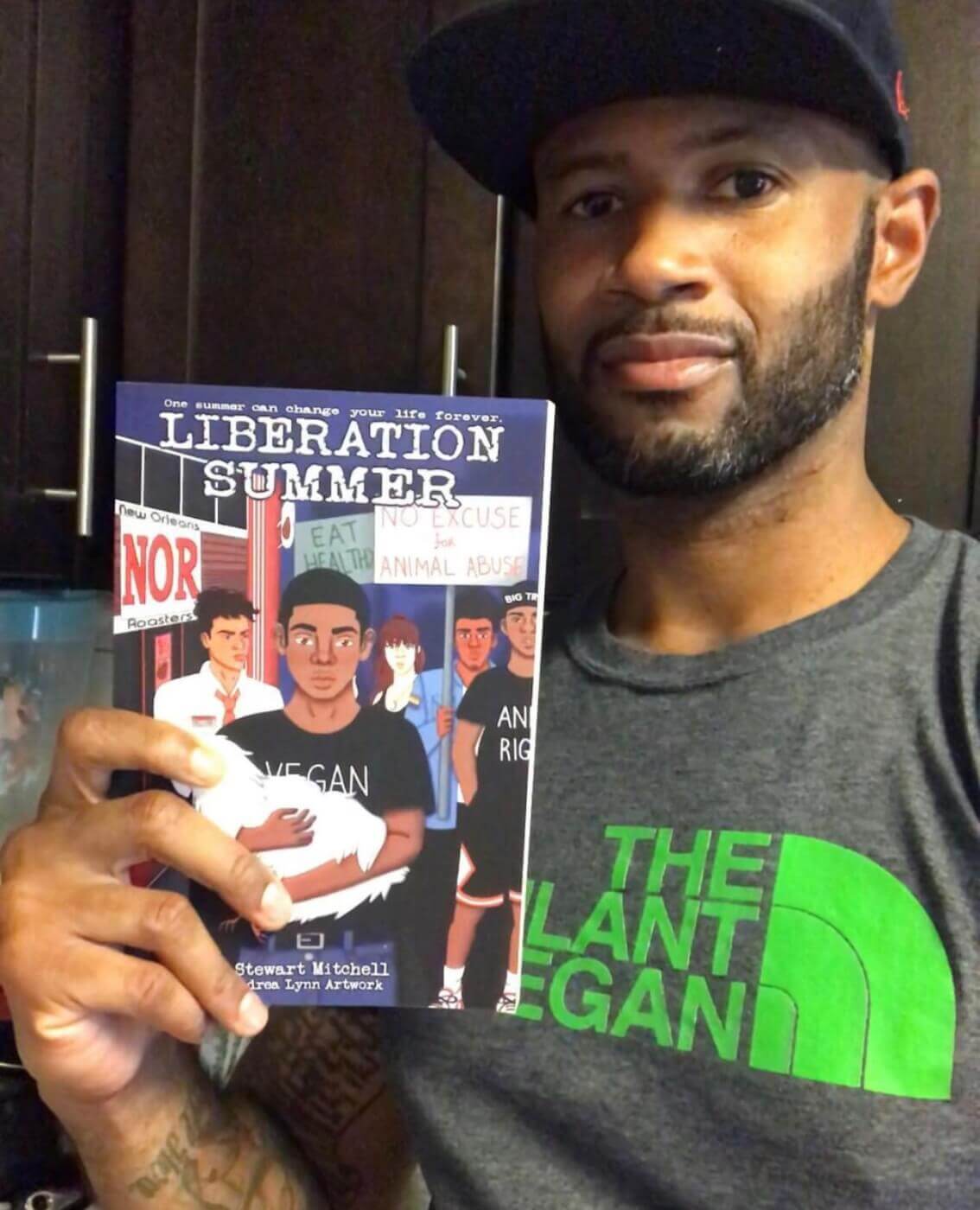
Contact us at [email protected] if you would like to schedule a virtual “Meet the Author” event for Liberation Summer at your school with Stewart Mitchell.
If you’re unable to schedule an event at your school, you can e-mail student questions directly to the author at [email protected].
Real-World Connections
Civic engagement involves developing the knowledge, skills, and motivation to participate in activities that address issues of public concern. In Liberation Summer, students read about the journey a young person takes from learning about an issue and becoming motivated to effect change to engaging in activism for something he or she believes in.
Have students brainstorm a list of things they would like to change within the school, community, or world. Then, have them choose the issue they are most passionate about and form a group with other students who share the same passion to brainstorm ways to address the issue.
Students can make posters, create videos, write letters to officials, start petitions, attend town hall meetings, and more to engage in activism. Here are some activism ideas to help animals:
- Organize a supply drive for the local animal shelter.
- Get your school to ban glue traps on campus (just like this student did!).
- Host a cruelty-free fashion show.
- Get your school to introduce vegan options in the cafeteria.
Students can also become members of the PETA Kids “Kind Kid” program. In this program for children ages 12 and under, students will receive an official membership card and monthly e-mails with an activity they can do to help animals (i.e., make cat toys for animals at a shelter).
Additional Resources for Students
- PETAKids.com (for children 12 and under)
- The “Kind Kid” Program
- “A Chicken’s Life” Comic
- Animal Facts
- How to Go Vegan: A Kid’s Guide
- Kayla the Vegan (another book by Stewart Mitchell)
Like these ideas? Please share them to inspire other teachers to incorporate compassion for animals into their literacy lessons.
If you’d like more classroom inspiration, fill out the form below to sign up for TeachKind News:
By submitting this form, you’re acknowledging that you have read and agree to our privacy policy and agree to receive emails from us.