
Why Humane Education?
Humans create arbitrary barriers to exclude anyone who isn’t like them. We have justified war, slavery, and sexual violence by believing that humans who are “different” are not worthy of moral consideration. And we do the same thing with animals.
This is wrong.
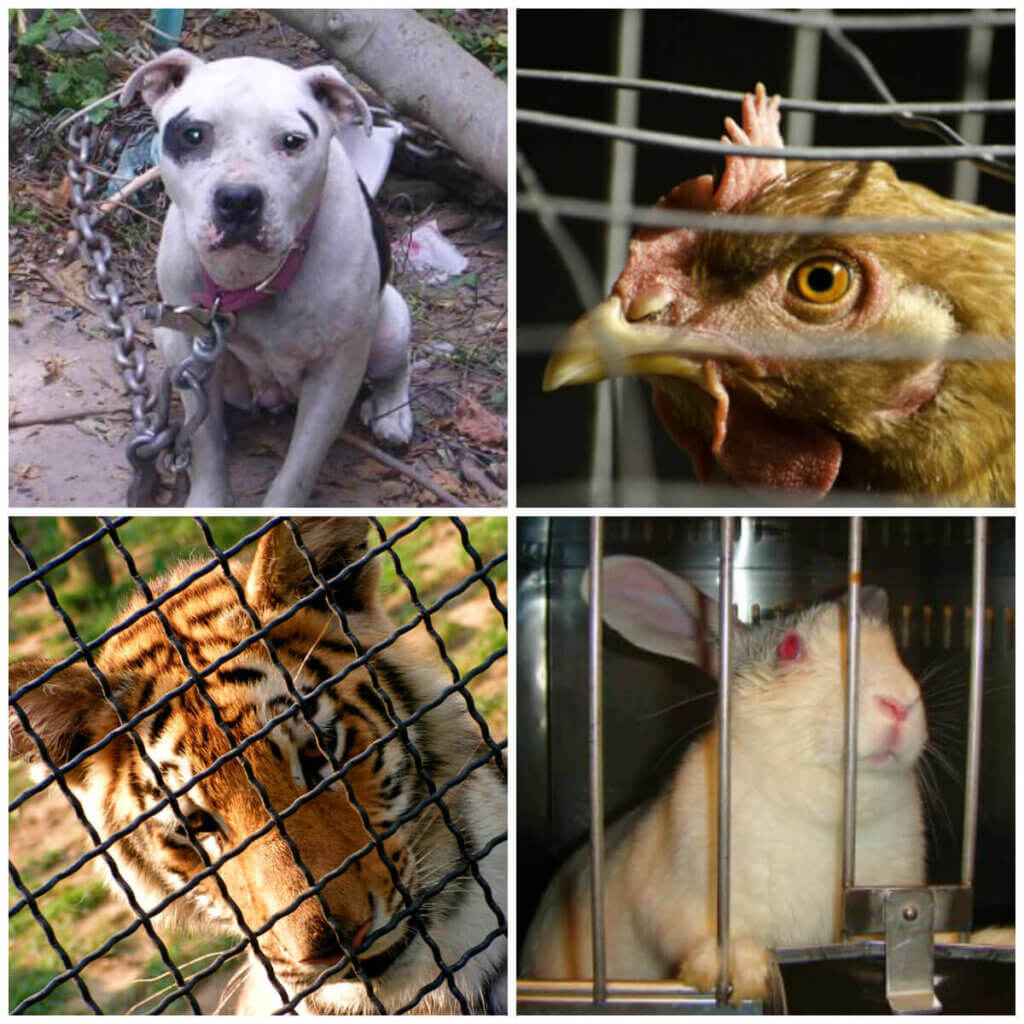
We are taught the Golden Rule as young children, and all major religions teach principles of nonviolence and kindness. But the Golden Rule must be extended to all living, feeling beings—reptiles, mammals, fish, birds, amphibians, crustaceans, insects, and others.
We are taught from a young age to discriminate among sentient beings. We’re fooled into eating the flesh of farmed animals and accepting the deaths of hunted ones, while cuddling with furry baby animals. We grow up confused—as adults, most of us feel sick and sad when we see animals being tortured or killed, yet we continue to purchase and consume the flesh, secretions, fur, and skins of animals on a regular basis. We work hard to deceive ourselves and each other in order to maintain the illusion of human supremacy.
As an educator, you have a chance to teach your students that all animals—whether rats, pigs, dogs, or children—feel pain, happiness, and fear and want to live. Teaching empathy and compassion for animals not only helps animals but also lessens the likelihood that kids will grow up to be cruel to other humans. We know, for example, that many violent offenders, including many serial killers, started out harming animals before moving on to humans.
Humane Education Is Social-Emotional Learning in Action
Today’s educators are increasingly asked to help students develop empathy, responsible decision-making, relationship skills, and emotional awareness alongside academic achievement. Humane education naturally supports these goals because it invites students to consider the perspectives, needs, and experiences of other living beings. As students explore how animals communicate, solve problems, care for their families, and experience joy, fear, and loss, they practice the very skills that social-emotional learning (SEL) is designed to cultivate.
Kids love animals. Start there.
This simple truth is at the heart of TeachKind’s approach to social-emotional learning (SEL), and it’s powerfully illustrated in the following story from Senior Program Manager, Lisbet Chiriboga.
Rather than treating SEL as a separate initiative, humane education weaves these competencies into everyday instruction. Whether students are analyzing informational texts, writing arguments, conducting scientific investigations, or engaging in classroom discussions, they are simultaneously strengthening empathy, perspective-taking, critical thinking, and responsible decision-making. This allows teachers to meet academic standards while helping students become more compassionate and thoughtful members of their communities.
You can make a big difference. Become a TeachKind teacher and sign up for TeachKind Emails below.
By submitting this form, you’re acknowledging that you have read and agree to our privacy policy and agree to receive emails from us.