
Adopt Me, Please! A Persuasive Writing Project With Real-World Meaning
Better Writing, Bigger Hearts, and Boosted Engagement.
(Not so fun) Fact: Student engagement is at an all-time low. Across the country, teachers are seeking meaningful ways to help students reconnect with learning, build stronger relationships, and see school as a place where their ideas matter.
Imagine a single project that can foster genuine engagement, enhance literacy skills, boost SEL, and assist animals in need—all simultaneously.
Enter: Adopt Me! Essays and Adoption Profiles
Adoption profiles are a powerful way to integrate persuasive writing, character education, community engagement, and advocacy for animals in need, giving students a real-world reason to get creative. By partnering with a local animal shelter, learners flex their empathy muscles to help shelter residents find the safe, loving homes they deserve. The project is simple, flexible, and adaptable to any grade level and learning setting, with the potential for remarkable results.
Continue reading to explore the process, benefits, and ways to implement adoption-profile projects in the classroom, preparing students to become confident changemakers in their communities and beyond.
Step-by-Step
Step 1
Connect with a local animal shelter
Connect with a local animal shelter or adoption agency and let them know that your class would like to help by writing adoption profiles for some of their most overlooked or long-term residents to help them get adopted. Ask whether they can recommend animals who would especially benefit from a little extra attention or share photos and background information for your students to use.
Be sure to emphasize that you’re looking for a simple way to support their efforts, not to create extra work for them. In many cases, your students’ writing provides shelters with fresh, engaging content they can share online or in adoption materials, making this a fun, free form of marketing for animals who need it most.
Step 2
Choose the format that serves your class
Choose the format that best serves your class’s needs. Students can:
- Write persuasive essays, profiles, or letters encouraging adoption
- Create adoption portraits, posters, or other visual artworks
- Develop digital presentations or produce videos
Depending on your selection, provide a profile template, a persuasive writing organizer, or another format to help students get started.
Step 3
Invite shelter staff to share photos and bios
Invite shelter staff to share photos, bios, or personality traits of the animals in their care. If possible, arrange a virtual meet-and-greet to help students gather supporting details.
Step 4
Have students draft, revise, and finalize their work
After collecting information, have students draft, revise, and finalize their work. Encourage them to include descriptive details, personality traits, and a clear call to action.
Step 5
Cover persuasive writing skills
Your mini-lessons will cover the same persuasive writing skills—such as grabbing a reader’s attention and supporting a claim. The difference is that students will be far more engaged because they’re writing about a real-world topic that can help shelter animals find loving homes.
Step 6
Share finished copies with the animal shelter
Send the finished pieces (or copies) to the shelter so staff can display them on animals’ kennels, helping attract potential adopters and connect cats, dogs, and other animals with the loving guardians and homes they deserve.
Step 7
Showcase students’ work and team up with colleagues
Showcase students’ work in the classroom, hallway, school newsletter, or on a shared digital platform. Better yet, turn it into a cross-curricular collaboration by partnering with your school’s art teacher. Classroom teachers can guide students in researching and writing persuasive adoption profiles, while art classes create portraits or illustrations of each featured animal. Together, students produce polished adoption materials that pair strong writing with eye-catching artwork.
Share the idea with your colleagues; the more classrooms involved, the more animals can benefit!
Ready-to-Go Resource: Adopt Me! Worksheets
Bring your students’ adoption profiles to life with our free, print-and-go “Adopt Me!” worksheets, available in versions for grades K–2 and grades 3–5. Designed to help young advocates practice the art of persuasive writing while showcasing each animal’s unique personality, these ready-to-use templates make it simple for teachers to launch a meaningful project that builds literacy, empathy, and real-world communication skills.
Why Adoption Profiles Work
An adoption profile project is simple to implement, extremely adaptable, and meaningful for everyone involved. You can go as big or as simple as you want. Turn it into a schoolwide service-learning project by partnering with a local shelter, inviting shelter staff to speak with students, arranging a virtual meet-and-greet with adoptable animals, or displaying student work at a community event.
Or keep it wonderfully simple: Visit a local shelter’s website, choose photos and bios of adoptable animals, and have each student write an adoption profile to help one of them find a home. No field trip or formal partnership is required.
Adaptable for All Ages
Whether you’re teaching kindergarten or high school, this project can be adapted for any grade level and integrated into literacy, SEL, art, and community engagement lessons using everyday classroom materials. Community-connected learning doesn’t have to be complicated—it just takes a caring teacher willing to help students use their skills to make a real difference.
Connected to Real-World Purpose
What makes adoption profiles especially powerful is their real-world purpose. Much like the popular “All About Me” activities students enjoy, this project invites children to learn about an individual animal’s personality, preferences, and life story. Instead of introducing themselves, students become advocates for someone else. As they learn about another animal’s experiences, they naturally begin to ask questions and form an emotional connection.
Because their work could help an animal find a home, students often become more invested in the learning process. They revise more carefully, collaborate more thoughtfully, and take greater pride in their work. Suddenly, revising and editing aren’t just another assignment; they have a real purpose. When students realize that unclear writing could keep someone from understanding why an animal deserves a home, they become far more willing to strengthen their word choice, improve organization, fix grammar, and revise for clarity. They want their message to be heard because it matters.
Learning that Leaves a Lasting Impact
The impact often lasts long after the project ends. Teachers often observe that students keep asking about “their” animals for several weeks or months, eagerly checking whether they have been adopted and celebrating once they find homes. Many students also share their profiles with family, encourage others to adopt, and leave with a better understanding of how their voices can create positive change.
This kind of work also gives students something just as important as academic practice – it gives them agency. When children see that their voices can improve another individual’s life, they begin to see themselves as helpers, problem-solvers, and active members of their communities. They practice empathy not only for the animal they are writing about, but also for the people and families who may read the profile and choose to adopt.
That is what engaged learning looks like when students are invited to be part of the solution.
Real Classrooms, Real Results
Throughout the country, teachers have observed the impacts of adoption-profile projects firsthand. These initiatives reinforce for students that their voices are important and that their skills can help address real-world issues.
The educators below demonstrate the benefits of adoption profiles for persuasive writing lessons, art studies, STEM, and beyond. Prepare to be inspired!
STEM Club members at Walnut Grove Elementary School
Fifth-grade students combined art, STEM, and compassion to create adoption profiles and portraits for shelter residents, helping more than 50 animal companions gain visibility and find loving homes. The project gave students a meaningful opportunity to apply creative and problem-solving skills in a real-world setting while fostering empathy, community connections, and a deeper understanding of how their actions can make a positive difference.
Elementary learners from Kansas City, Missouri
Third- and fourth-grade students transformed their persuasive writing assignments into full-scale adoption campaigns, demonstrating how classroom activities can generate meaningful community impact. Students realized their words hold power, and their teachers observed improved spelling and writing skills, driven by their motivation to support a cause that mattered to them.
Art students in Prince George County, Virginia
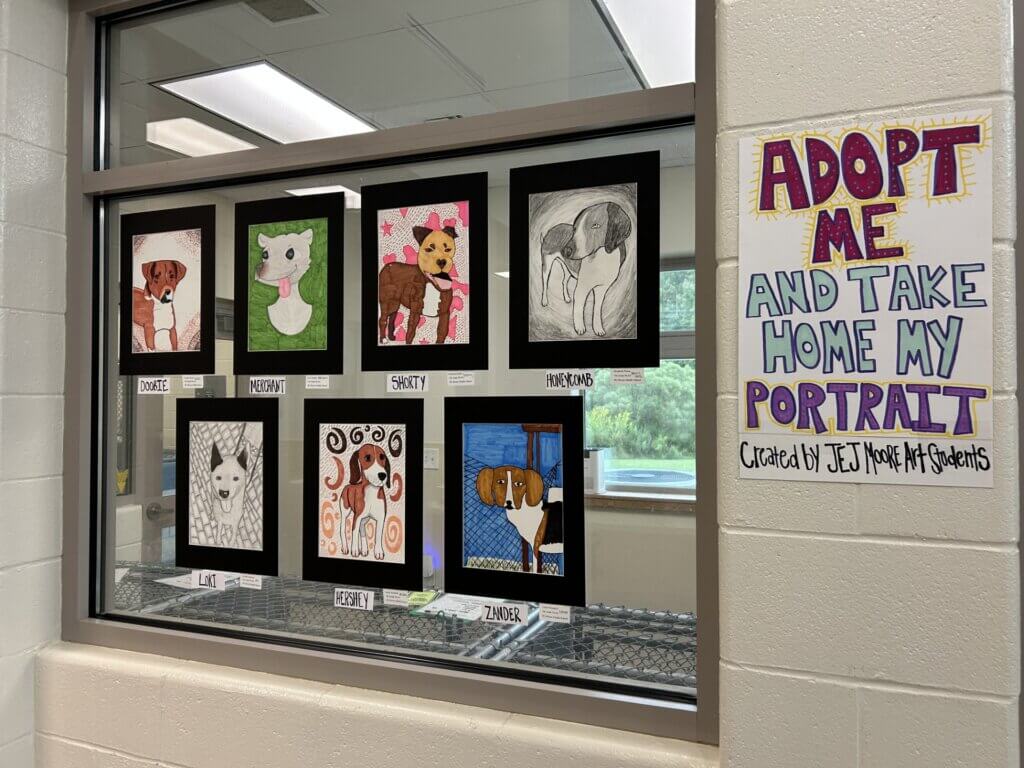
Beyond profiles, students might create illustrated posters, door cards, portraits, collages, or other artworks depicting shelter residents. In Award-Winning Art Educator Makenzie Onizuk’s class, students created portraits of senior dogs and cats to promote the adoption of older animals who are often overlooked. Their artworks were showcased at the shelter and dedicated to each companion animal. These portraits were given to families when they adopted the animals, serving as a one-of-a-kind keepsake that recognized each animal’s individuality and celebrated their new home.
Second-grade students at St. Michael’s Episcopal School
After a virtual tour and a review of each shelter resident’s profile, students created letters and drawings that highlighted the personalities and unique qualities of 24 adoptable animals. Their efforts helped twenty animals find homes while their teachers achieved curricular goals.
Keep reading for more ways to bring these learning gains into your classroom.
A Purr-fect Fit for Persuasive Writing
Adoption profiles are an especially effective way to teach persuasive writing. As students learn about the cats, dogs, or other animals they’ll be writing about, encourage them to consider the following questions:
- “What makes this individual special?”
- “What do they need to thrive?”
- “What details will help someone feel connected enough to take action?”
Considering these and other details helps make thoughtful, evidence-based decisions that effectively bring persuasive writing to life.
Because the audience extends beyond the classroom, students often take greater ownership of their work. They understand that their writing could genuinely help an animal find a home. This real-world goal turns persuasive writing from a classroom task into impactful advocacy.
From “All About Me” to “All About Them”
Many teachers already use activities that help students explore their identities, discover their strengths, and connect with classmates. Adoption profiles build on these familiar classroom traditions while encouraging students to extend the same curiosity and compassion toward animals in need.
Consider the various ways students already learn to tell stories about themselves. Many of these can be easily adapted to apply to other animals. For example:
Personal Poems
Students describe who they are through adjectives, emotions, hopes, fears, and dreams. A shelter-profile version invites students to imagine how an animal might introduce themselves: Who loves squeaky toys? Who needs a patient family? Who dreams of a sunny windowsill?
Acrostic Name Posters
Children use letters in their names to highlight their interests and personalities. Students can create similar acrostic profiles for adoptable animals, using each letter to showcase unique traits and characteristics that make them special.
“Celebrating What Makes Me Unique” Narratives
Older students often reflect on what makes them different and how those experiences have shaped them. This same lens can encourage students to think critically about animals who may be overlooked because of their age, appearance, disability, or special needs—and to craft compelling narratives that help others recognize their unique strengths.
All About Me Portraits and Collages
Whether created with paint and paper or digitally, these visual displays help students communicate their identity through images and encourage developing artists to explore a range of techniques and media. Shelter residents can become the focus of similar artworks that highlight their favorite activities, personality traits, and needs and dreams for a future home.
No Trip Needed
One of the best things about adoption profile projects is their accessibility. While an in-person visit can certainly deepen students’ connections, it’s far from necessary. Many classrooms successfully collaborate with shelters and adoption agencies through:
- Virtual meet-and-greet sessions
- Live video calls with shelter staff
- Photographs and videos provided by shelters
- Shelter websites and adoption profiles
This means students can build meaningful connections with animals in need without leaving the classroom, and shelter residents can stay comfortable in their familiar environments.
A quick email or phone call to a local shelter is often all it takes to begin a powerful partnership.
Ready to try it?
The next time you’re planning a persuasive writing unit, community engagement project, art integration activity, or service-learning experience, consider reaching out to a local animal shelter or adoption agency first.
A simple collaboration can build empathy, foster civic engagement, and help students discover the incredible power of using their voices for good. Most importantly, it can create the kind of authentic, purpose-driven learning that inspires students to show up, stay engaged, and see themselves as part of the solution.
That is why these projects matter so much: They help students go above and beyond, not for a grade but because the work feels meaningful and has a tangible impact. They encourage collaboration, research, descriptive writing, and thoughtful revision. They spark curiosity and inspire students to keep learning so they can be part of the solution. In doing so, they show that school can be a place where children not only prepare for the world — they actively shape it.
In other words, a place they want to be.

Want more ways to boost engagement? Sign up for TeachKind emails!
By submitting this form, you’re acknowledging that you have read and agree to our privacy policy and agree to receive emails from us.