
Companion Animals
They share our homes, our hearts, our sofas, and our snacks—so how do we ensure kids know how to care for and respect them? We provide resources to help students see these animals as individuals with unique personalities and needs, so they’re more likely to become lifelong advocates for all animals. We help students learn how to care for, respect, and truly understand the animals closest to them, setting the stage for a lifetime of kindness.

What Life Is Like When You’re a Chained Dog
Free Resources to Teach Empathy and Inspire Action for Chained, Backyard Dogs Right this second, countless dogs are chained outdoors …
Explore

Adopt Me, Please! A Persuasive Writing Project With Real-World Meaning
Better Writing, Bigger Hearts, and Boosted Engagement. (Not so fun) Fact: Student engagement is at an all-time low. Across the …

Teacher Spotlight: Meet Dennis Yong
Meet biology teacher Dennis Yong and discover how he inspires students through humane education, environmental science, and compassion for animals.


Share the World: Visual Support Guide (Grades K-2)
This free visual support guide from TeachKind’s Share the World program helps K–2 students build empathy and comprehension using engaging animal images and social-emotional learning tools.
What’s New

Free resources. Fresh ideas. More kindness.
Join the TeachKind email list for free, ready-to-use lessons, activities, printables, games, and inspiration for educators working with learners of …

A Taste of the Past: Teaching Ancient History Through Food & Compassion
Explore free, standards-aligned reading comprehension resources that introduce students to the food, philosophies, and cultural traditions of Ancient China and Ancient Greece—while building literacy skills, critical thinking, and compassion for animals.
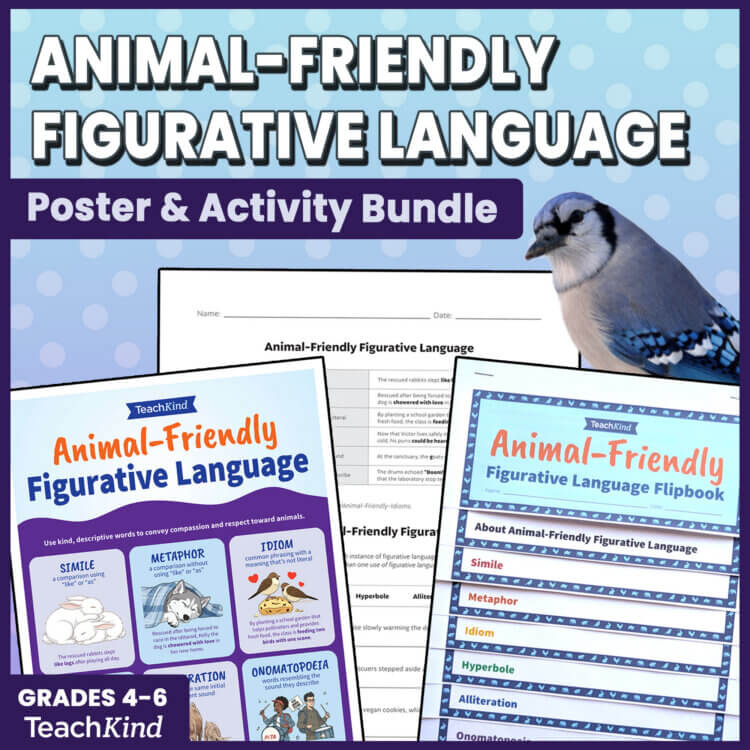
Make Figurative Language Meaningful and Engaging with Animal-Friendly Writing
Have fun with figurative language! These resources help students identify, interpret, and create similes, metaphors, idioms, hyperbole, alliteration, and onomatopoeia while understanding that animals have feelings, too.