
Make Figurative Language Meaningful and Engaging with Animal-Friendly Writing
Want to have fun while teaching figurative language?
Teach literary devices using topics students love—animals! Language studies can be enjoyable when students focus on topics they know and like.
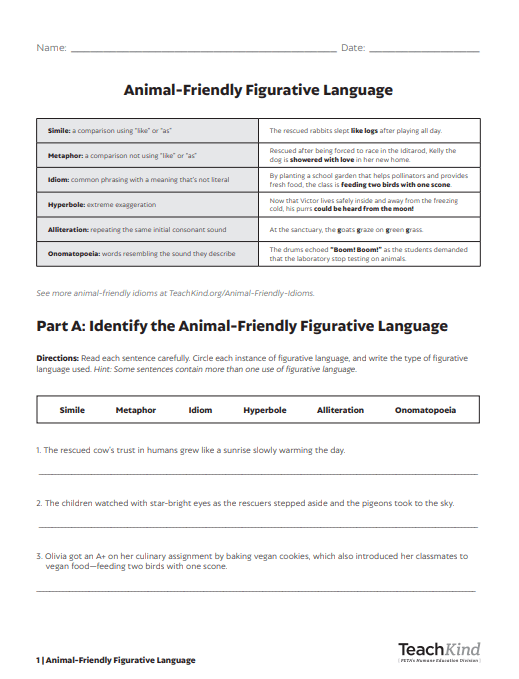
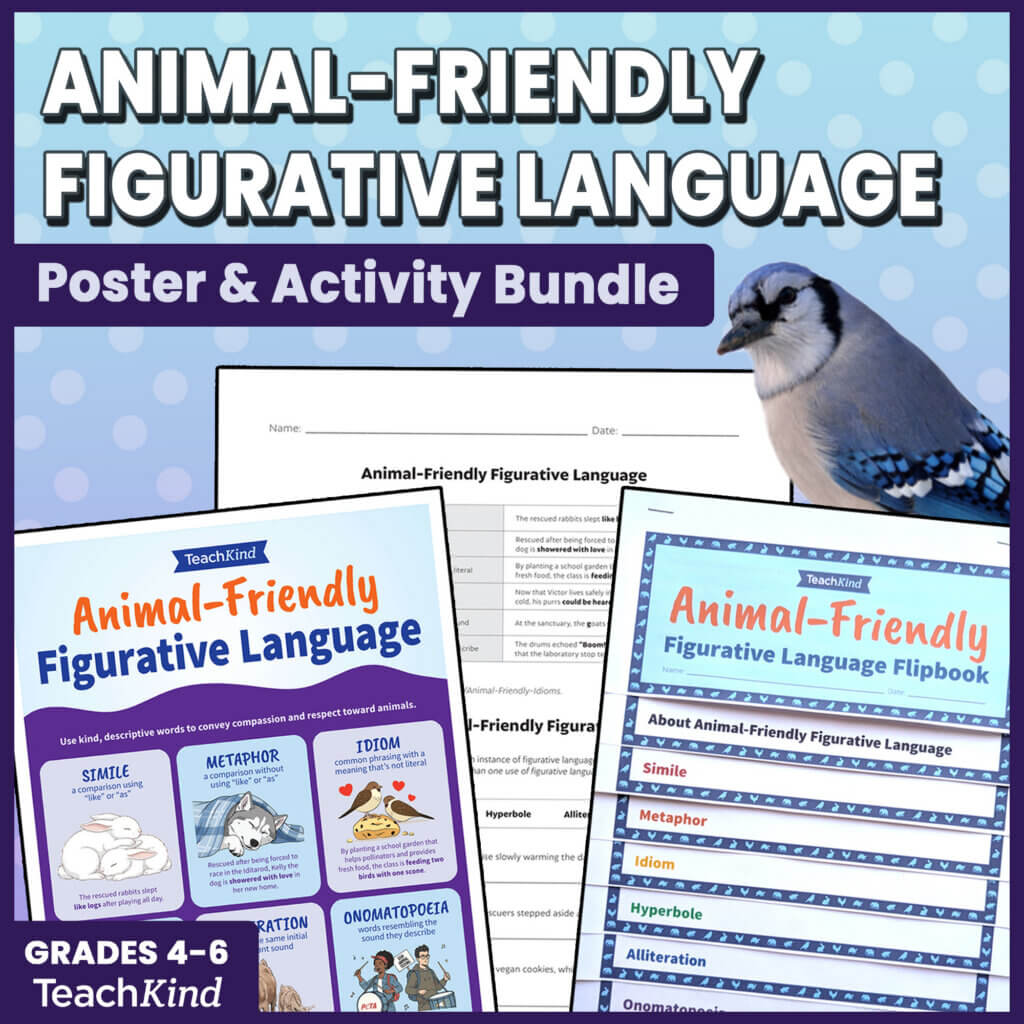
TeachKind’s engaging Animal-Friendly Figurative Language resources give students a fresh way to practice six common literary devices: simile, metaphor, idiom, hyperbole, alliteration, and onomatopoeia.
In addition to becoming more familiar with literary devices, these lessons ask students to think critically about how words shape how we see the world.
🌟 Bonus: By creating a natural connection between literacy, critical thinking, and empathy, students will consider kinder ways to think and write about animals.
What is Animal-Friendly Figurative Language?
Animal-friendly figurative language is the intentional use of language to express the feelings, intelligence, and agency of animals. To foster empathy in the classroom (and beyond), encourage students to use animal-friendly language to understand that animals are like us—they deserve respect and want to experience the beauty of relationships, joy, peace, and comfort.
This practice can also naturally spark conversations about how the words we choose shape our thinking—helping students recognize that inclusive, respectful language matters for both animals and humans (e.g., “a student with autism” instead of “an autistic student,” or “firefighter” instead of “fireman”).
Bring Figurative Language to Life
Students encounter figurative language everywhere—in books, songs, advertisements, conversations, and social media. Understanding it helps them interpret what they read and communicate their own ideas more effectively.
The challenge? Students can often identify a simile or metaphor without fully understanding why an author used it or what it adds to the message.

Animal-friendly examples provide an engaging context for moving beyond identification.
Instead of simply asking students to identify the types of figurative language being used, ask:
- What does this comparison help us understand?
- How does this language affect the reader?
- Why might the writer have chosen these words?
These questions encourage students to look more closely at language and consider how word choice can communicate preconceived ideas and emotions toward animals.
Explore Six Types of Figurative Language
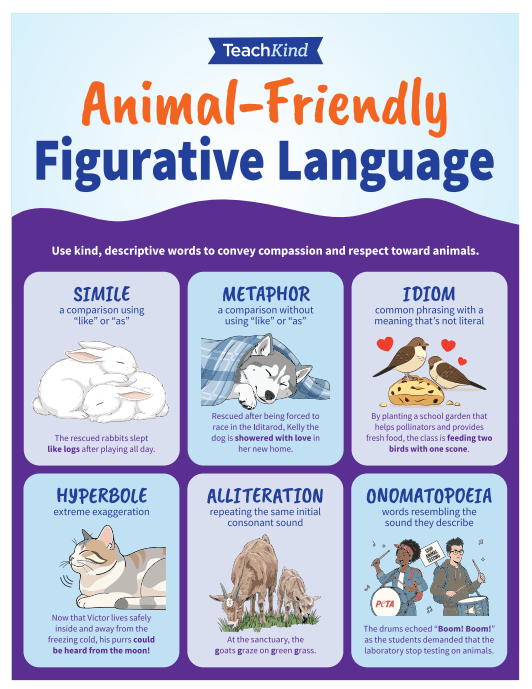
These Animal-Friendly Figurative Language resources introduce and reinforce six common literary devices:
- Simile
- Metaphor
- Idiom
- Hyperbole
- Alliteration
- Onomatopoeia
Students encounter each literary device in animal-centered examples and have opportunities to:
✅ identify the figurative language,
✅ explain its meaning, and
✅ create their own examples.
🌟 The result is more than a vocabulary exercise. Students practice using context clues, interpreting meaning, and thinking about authors’ choices.
Three Figurative Language Resources to Support Learning
1️⃣ Lesson & Answer Sheet
Ready to put figurative language into practice?
This lesson guides students through identifying and interpreting figurative language before inviting them to create their own examples.
Students consider how figurative language can communicate animals’ emotions and experiences, then use what they’ve learned to write original sentences and explain their reasoning.
This progression—identify → interpret → create → reflect—helps students move beyond simply recognizing literary devices to understanding and using them.
Lesson
Accompanying Answer Key
2️⃣ Flipbook
This hands-on, creative lesson gives students a handy reference to use as they learn and practice figurative language throughout the school year.
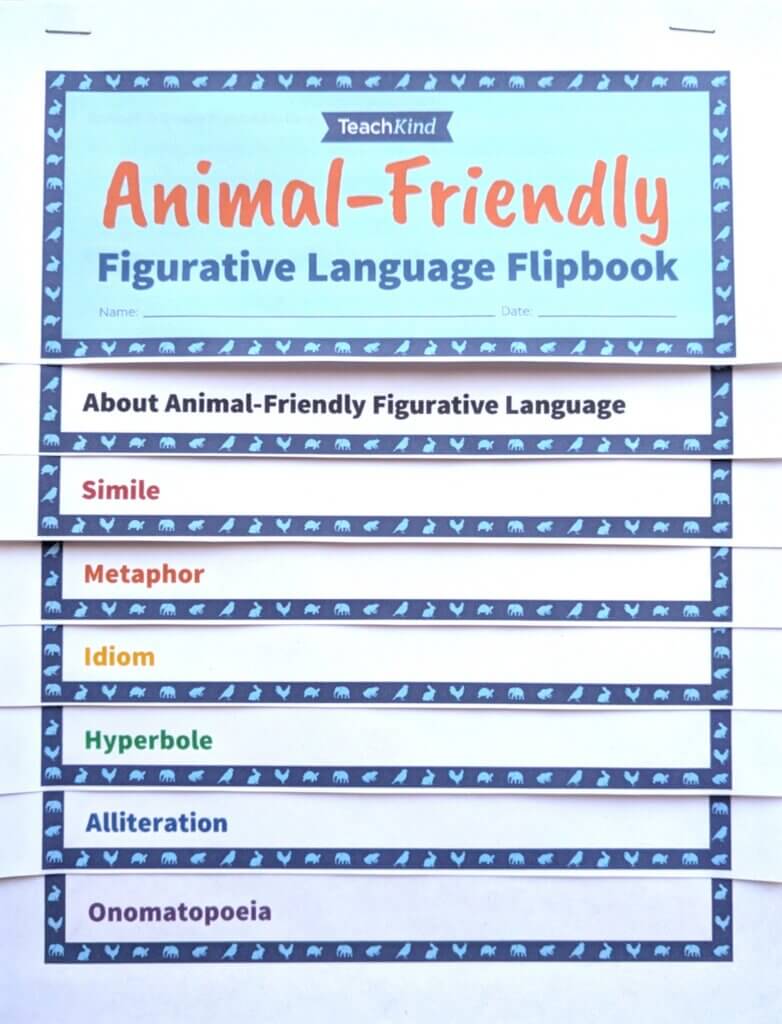
After studying the six literary devices, students create their own flipbook where they:
✅ explain what animal-friendly figurative language is and why it is important,
✅ define the six literary devices,
✅ create sample sentences, and
✅ illustrate each device.
Students can keep their books with them throughout the school year for easy reference.
Flipbook in Color
Flipbook in Black & White
3️⃣ Classroom Poster
Keep figurative language visible throughout the school year with a classroom poster featuring the same six literary devices.
The poster can serve as a quick visual reference during lessons, writing activities, independent practice, or review.
Having these terms readily available helps students focus less on remembering definitions and more on using figurative language effectively.
Turn “What Is It?” into “What Does It Do?”
Figurative language can help readers visualize a scene, understand a feeling, create a particular tone, or see something from a different perspective.

Encourage students to ask:
- What picture does this language create in my mind?
- What feelings toward animals does it communicate?
- What does the comparison help me understand about animals as individuals?
- How would the sentence change if the writer used literal language instead?
- Why might the author have chosen this particular comparison?
These questions help students develop the kind of close-reading and critical-thinking skills they can apply across texts and subjects.
🌟 Bonus: This lesson will lead students to see animals as “she,” “he,” and “they,” not as “it.”
Whether you’re introducing figurative language for the first time, reviewing literary devices, or looking for a fresh activity to reinforce students’ ELA skills, TeachKind’s engaging, ready-to-use resources—lesson and answer key, flipbook, and classroom poster—provide everything you need to help students identify figurative language, interpret its meaning, and put it into practice.
🐮🐇🐸 Give your students a new way to explore the power of words—with animals leading the way! 🐬😸🐔
Download Bundle on Teachers Pay Teachers
Want more ways to boost engagement? Sign up for TeachKind emails!
By submitting this form, you’re acknowledging that you have read and agree to our privacy policy and agree to receive emails from us.