
Help Students Build SEL Skills Naturally With TeachKind Resources
Building Social and Emotional Learning Skills With TeachKind Resources
Students need more than academic knowledge to thrive. They need whole-child supports that help them manage emotions, build resilience, solve problems, and care for the humans, animals, and communities around them.
Teacher feedback makes that need impossible to ignore: a recent survey found that 75% of teachers said students’ SEL skills have declined significantly over the past decade.
They identified challenges such as impulse control, self-motivation, problem-solving, respecting others, and perspective-taking as particularly difficult. But those skills can’t be skipped.
Helping students succeed means supporting them as they practice essential skills they’ll use to build and maintain relationships throughout their lives. These skills are key to their personal growth and should not be overlooked.

Seamlessly integrate these resources into the subjects you already teach
Children naturally care about animals. That built-in compassion creates authentic opportunities to teach empathy, emotional regulation, perspective-taking, collaboration, responsible decision-making, and resilience—all while meeting academic standards.
TeachKind’s free resources make social-emotional learning part of everyday instruction, rather than one more thing to fit into an already full schedule. Read on to learn more, and explore by core competency below.
Watch: SEL Through Compassion for Animals
See how compassion for animals naturally strengthens social-emotional learning.
Rather than teaching SEL as a separate lesson, this short video demonstrates how everyday learning experiences centered on animals help students:
- build empathy
- strengthen emotional literacy
- practice perspective-taking
- develop responsible decision-making
- collaborate with classmates
- turn compassion into meaningful action
These experiences don’t just support core SEL competencies—they also reinforce today’s approaches to whole-child education, trauma-informed classrooms, restorative practices, and positive classroom culture.
SEL in Action
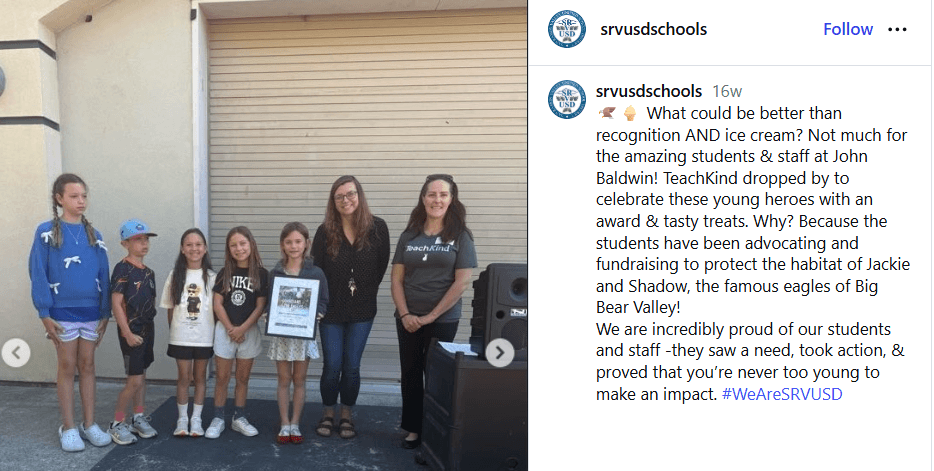
Want to see what this looks like in real life? Students at John Baldwin Elementary School spent weeks observing bald eagles Jackie and Shadow through a live nest camera during lessons with their science teacher. Teachers across the country are using live cams to give students an up-close look at wildlife, but what made this experience truly extraordinary was taking that observation a step further: students learned about the real-life challenges facing Jackie and Shadow and, importantly, that the eagles needed their help. As students watched the eagle family raise their eaglets, they formed a genuine emotional connection with the birds—and that combination of connection, awareness, and a sense of agency helped take their engagement to remarkable new heights.
When they learned that nearby development threatened the eagles’ habitat, they decided to help. Students organized bake sales, lemonade stands, leafleting campaigns, handmade origami sales, and community outreach to raise awareness and funds for habitat protection. It’s a powerful reminder that simply observing animals can spark interest, but helping students understand their plight—and empowering them to make a difference—can turn that interest into extraordinary action.
Through one authentic project, students practiced every major SEL competency.
Students deepened their empathy after learning about the challenges Jackie and Shadow faced.
They recognized their own values, emotions, and capacity to make a difference for others.
Instead of feeling helpless, they identified meaningful solutions and took action.
Students collaborated with classmates, families, educators, and community members.
They transformed concern into positive action through teamwork, planning, and perseverance.
The students’ dedication even caught the attention of local news media, which featured their efforts to raise awareness and funds to help protect Jackie and Shadow’s habitat.
“I learned that I am small, but my voice can be very loud.”
—John Baldwin Elementary student
Inspired by the students’ passion for defending Jackie and Shadow’s habitat, their classroom teacher adapted her persuasive writing unit to encourage students to write letters to family members, community leaders, influencers, and celebrities, urging them to support the protection effort through donations. The project also blossomed into a wonderful collaboration among colleagues, who worked together to amplify their students’ voices and turn their shared compassion into meaningful action.
Recognizing the students’ compassion for animals and the teachers who empowered them to make a difference, TeachKind honored John Baldwin Elementary School with a Guardians of the Eagles Award and a well-deserved vegan ice cream party to celebrate how compassion for animals inspired meaningful learning, civic engagement, and real-world problem-solving.
🦅 Thank you for being champions for animals, John Baldwin Elementary School! 🏅
Why Compassion for Animals Works
Children don’t have to be convinced to care about animals—they already do. That natural connection provides a meaningful entry point for students to:
- recognize and express emotions
- practice perspective-taking
- develop empathy
- solve real-world problems
- communicate respectfully
- build resilience
- work collaboratively
- become confident advocates for positive change
Because students are emotionally invested, discussions become richer, writing becomes more meaningful, and learning becomes more memorable. Instead of adding SEL lessons, educators teach existing standards through topics students genuinely care about – such as other animals.
When compassion for animals is part of everyday learning, SEL becomes a natural extension of literacy, science, social studies, writing, and classroom community-building. We call this feeding two birds with one scone.
Explore TeachKind Resources by Core Competency
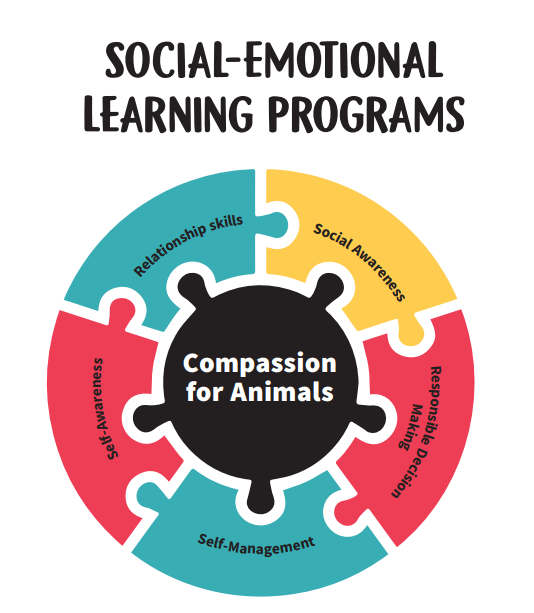
CASEL’s SEL framework identifies five core competencies—self-awareness, self-management, social awareness, relationship skills, and responsible decision-making—which can be taught across grades and settings.
Want to teach a specific skill? Read on to discover examples, activities, and ideas showing how compassion for animals can help.
Self-Awareness
Support students in recognizing emotions, reflecting on their values, and understanding how feelings influence choices and behavior.
Elementary
Help students build self-awareness by using these animal-centered writing prompts to explore their emotions, reflect on what matters most to them, and consider how their feelings can shape their choices and actions. As students put their thoughts into words, they’ll strengthen emotional literacy while discovering how compassion for animals can inspire thoughtful, values-driven decisions.
By exploring the thoughts, feelings, behaviors, and unique abilities of other animals through engaging reading passages and discussion questions, students are encouraged to reflect on their own emotions, values, and actions, strengthening their self-awareness. As students recognize similarities between themselves and other animals, they develop a deeper understanding of their own identity, emotions, and capacity for empathy while building essential reading comprehension skills.
Middle and High
This activity helps students examine the gap between beliefs and behavior, encouraging honest self-reflection and deeper awareness of how choices affect humans and other animals. As students consider ways to bring their actions into greater alignment with their personal values, they strengthen their ability to recognize their own perspectives, evaluate their decision-making, and make more intentional, ethical choices.
Self-Management
Help students learn how to regulate their emotions, practice self-control, and respond thoughtfully to challenges.
Elementary
Using TeachKind’s Empowering Affirmations activity, students practice positive self-talk and reflect on their strengths, values, and emotions, helping them build the self-awareness needed to recognize how their thoughts and feelings influence their actions. As children affirm both their own worth and the value of all animals, they develop a stronger sense of identity, confidence, and compassion—key foundations of social-emotional learning.
Use the Emotions Dice Game to guide discussions on recognizing and managing emotions, improving self-control, and interactions with others. This hands-on activity helps students identify emotions, share feelings, and connect emotional awareness to better choices with humans and other animals.
Middle and High
Encourage students to process their emotions thoughtfully, reflect before responding, and engage respectfully with challenging topics through silent written dialogue and guided discussion. As teens consider diverse perspectives and regulate their reactions, they build the self-awareness, self-control, and responsible decision-making skills needed to navigate complex social issues with empathy and respect.
Social Awareness
Support students in developing empathy, respect, and appreciation for different perspectives, including those of other animals.
Elementary
Perfect for back-to-school or other community-building efforts, this pledge allows children to commit to putting the Golden Rule into action and inspires them to be respectful of all living beings and of the planet we share. As students reflect on and commit to kind actions, they develop empathy, practice perspective-taking, and recognize their role in creating a more caring and inclusive classroom community.
Through Junebug’s inspiring story, students discover that every individual matters, which helps them build social awareness by recognizing emotions, understanding different perspectives, and discussing how kindness can make a meaningful difference. Extension activities encourage students to connect the story’s message to real-life situations, inspiring compassion for animals and greater empathy for others.
Middle and High
CASEL defines social awareness as the ability to understand others’ perspectives and show empathy and compassion for others. One of our A-list teachers encouraged students to recognize the needs of vulnerable individuals and respond compassionately.
The students in this class went out of their way to humanely rescue animals who found themselves lost or in distress:
- “Are We Really That Special?”
This lesson encourages students to recognize and appreciate the perspectives, abilities, emotions, and experiences of non-human animals. As students examine examples of animals demonstrating language, intelligence, self-awareness, empathy, love, courage, and compassion, they are challenged to reconsider their assumptions. This perspective-taking can help students develop greater empathy and respect for others.
Relationship Skills
Help students strengthen communication, teamwork, collaboration, and conflict resolution through meaningful activities centered on helping animals.
Elementary
Help students discover shared interests and celebrate differences with this engaging personality quiz that sparks meaningful conversations and builds classroom connections. As students learn about one another through the lens of compassion for animals, they strengthen communication, respect, and the relationship skills needed to create an inclusive classroom community.
- DIY ‘Empathy Ball’ Game (K-5)
Get students talking, listening, and connecting with this interactive icebreaker that encourages thoughtful discussions about kindness, empathy, and helping others. By practicing active listening, sharing personal experiences, and responding respectfully to classmates, students build the relationship skills needed to form positive, supportive peer relationships.
Middle and High
This rescue story follows a California boy in a 4-H program who, with help from legendary songwriter and PETA supporter Diane Warren, prevented his beloved lamb, Cotton, from being slaughtered. As students read, they’ll discover how collaboration, persistence, and compassion can make a real difference for animals.
Students can explore what responsible advocacy looks like while considering how to help animals in need through informed, respectful action. Use this resource to help teens make a difference in the lives of “backyard dogs” while empowering them to become collaborative changemakers.
Responsible Decision-Making
Elementary
This lesson helps students strengthen responsible decision-making by exploring what companion animals need to thrive and considering how their everyday choices affect others. As students learn to recognize animals’ physical and emotional needs, they practice making thoughtful, compassionate decisions that demonstrate responsibility and respect for all living beings.
Centered on the story How to Heal a Broken Wing, these engaging activities encourage students to think carefully about how they should respond when they see an animal in need. Through discussion, reflection, and creative writing, students learn to make safe, caring, and responsible decisions while recognizing that even small acts of kindness can make a meaningful difference.
Middle and High
This rescue story strengthens responsible decision-making by encouraging students to analyze how two teens recognized an animal in distress, considered the best course of action, sought help from trusted adults and a veterinarian, and ultimately made ethical choices that saved the squirrel’s life. As students read, discuss, and evaluate the decisions made throughout the rescue, they build critical-thinking skills while reflecting on how their own choices can protect and improve the lives of others—human and other animals alike.
Bringing Compassion Into Everyday Learning
TeachKind’s free resources make it easy to weave compassion for animals into literacy, science, social studies, writing, and classroom discussions while reinforcing the social-emotional skills students need to thrive. Whether reading animal stories, analyzing issues, exploring science, or writing to protect wildlife, students develop empathy, resilience, and collaboration—skills essential for academic success, relationships, and happiness.
Humane education helps educators build those skills in ways that feel relevant, engaging, and easy to integrate. Because compassion for animals isn’t another topic: it is a natural path to SEL.