
Spark Engagement: Toolkits for Middle School Educators
Students have a natural affinity for animals. Harness that connection to inspire meaningful reading and writing experiences while building literacy skills and nurturing compassion for all living beings. Feed two birds with one scone!
🌎 Support for Multilingual Learners (ELLs/MLLs)
Students’ natural interest in animals can be a powerful bridge to literacy development. Animal-themed reading, writing, speaking, and listening activities can help multilingual learners connect everyday language with academic language. Because compassion for animals resonates across cultures and languages, it can increase engagement, motivation, and meaningful communication.
Try these strategies with any resource in this toolkit:
- Activate prior knowledge by inviting students to share experiences with animals.
- Use photos, videos, graphic organizers, and realia to support comprehension.
- Provide opportunities for partner talk and small-group discussions.
- Encourage speaking, drawing, and writing to share ideas about animals.
- Allow students to express ideas in their home language as they build English proficiency.
Grades 6-8
Reading, Reasoning, and Compassion: Middle School Literacy Toolkit
This toolkit helps teachers strengthen critical literacy skills through high-interest, animal-themed resources that invite middle school students to read deeply, think critically, and communicate with confidence. Organized around key literacy skills—including Active Reading, Writing, Debate, and Rhetorical Analysis—these toolkits provide meaningful opportunities for students to analyze information, explore different perspectives, develop well-supported ideas, and express their thinking through reading, writing, discussion, and debate. A bonus Critical Thinking & Argumentative Writing Unit gives teachers ready-to-use lessons that support evidence-based reasoning, persuasive writing, and thoughtful evaluation of multiple perspectives.
Through news articles, debate kits, writing prompts, rhetorical analysis activities, multimedia resources, and collaborative discussions, students practice close reading, analyzing claims and evidence, evaluating persuasive techniques, constructing well-supported arguments, and communicating their ideas with confidence. By connecting literacy instruction to issues students genuinely care about, the toolkit transforms essential academic skills into opportunities for curiosity, thoughtful discussion, informed decision-making, and compassionate action. 🐾📚💡📝
💡 Teacher Tip: As you read through these toolkits, you will come across:
✅ green check marks, indicating various ways you can use the resources, ➡️ blue arrows pointing to accompanying resources, and
💡 light bulbs with additional tips.
🍁Coming This Fall:
Film, History, and Ethical Reasoning

📚 Active Reading
Stories of people helping animals are all over the internet, and sharing them with your students is an excellent way to engage and motivate different types of learners and encourage them to take real-world action to help end animal abuse.
💡 Teacher Tip: Incorporate individual readings, discussions, or writing activities into your existing curriculum, or teach the collection as a complete literacy unit. Encourage students to support their ideas with evidence and engage in meaningful discussion.
Book Recommendations
These engaging, thought-provoking books support literacy growth and critical thinking. Expand students’ perspectives, spark meaningful discussions, and foster a stronger love of reading with animal-focused full-length texts.
✅ Incorporate these titles into whole-class or book club reading units.
✅ Add them to recommended reading lists.
✅ Incorporate some into your classroom library.
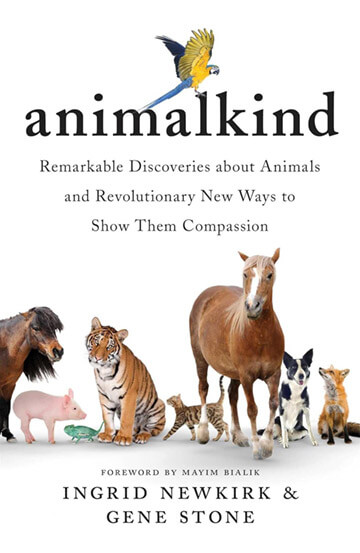

- Amanda the Teen Activist: Feathers & Freedom (6-8)
- Animalkind (8) ➡️ Watch Animalkind Documentary ➡️ Host a Student-Led Animalkind Book Club
- Bear Boy: The True Story of a Boy, Two Bears, and the Fight to Be Free (8)
- Claude and Medea: The Hellburn Dogs (6-7)
- Liberation Summer (6)
- Saving Animals: A Future Activist’s Guide (6-7)
- Unlocking the Animal World: Incredible Facts and How Kids Can Be Superheroes for Animals (in English & Spanish) ➡️ See accompanying videos and learning materials. (6)
Articles: Animal Rescue Stories
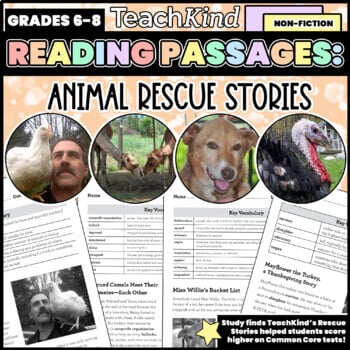
✅ Each TeachKind Rescue Story comes with a reading comprehension worksheet and video that tells a different animal’s story of transformation. Students will interact with the texts through key vocabulary and questions to encourage literal, inferential, and evaluative thinking.
➡️ Check out our Kahoot: “Mayflower the Turkey, a Thanksgiving Story”
➡️ TeachKind’s Rescue Stories worksheets were used in a study that found that middle school students who read passages about having compassion for animals performed significantly better on Common Core–aligned assessments, demonstrating that instructional time need not be sacrificed in order to instill empathy in young people!
Reading Passages: “The Hidden Lives of Animals”
This collection of 10 one-page reading passages exploring the inner lives of animals will inspire students to read, discuss, and write about what they learn. The articles feature cephalopods, chickens, cows, ducks and geese, fish, frogs, pigs, rats and mice, sheep, and turkeys, helping students build knowledge while strengthening literacy and critical-thinking skills.
✅ Read the articles in groups.
✅ Encourage discussion and note-taking.
✅ Assign written responses: summary; student-written discussion questions; creative or narrative writing of the animals’ lives; and further research.
➡️ Learn 39 Ways That Animals Are Just Like Us
Article: “Animals Are Not Inanimate Objects”
This engaging lesson naturally motivates students to think critically about language, categorization, and the ways humans perceive animals. Through discussion, close reading, and written reflection, students will strengthen key literacy and communication skills, including critical thinking, perspective-taking, evidence-based reasoning, speaking and listening, and analytical writing.
✅Challenge common assumptions about animals and the language used to describe them.
✅ Promote meaningful discussion while building empathy, curiosity, and deeper comprehension skills.
Comprehension Questions
After students read the text, have them respond to the following comprehension questions, citing details from the text whenever possible to support their opinions.
- In the article, the author says that future generations are facing the following questions: “Who are animals?” “What are we doing to them?” and “Should we change our behavior, no matter how much we like our old ways?” Write your answers to these questions in paragraph form, using your own opinions or details from the text to support them.
- How does the author define “animal rights”? What do you think the term means?
- List at least five qualities that differentiate animals from inanimate objects. Cite examples from the text and come up with some ideas of your own, too.
- What are some examples of ways that human prejudice toward animals could be compared to prejudice against other groups of humans?
- Name three animal capabilities that humans don’t have, using examples from the text. Can you think of any other examples? If so, explain.
- Some people dismiss animal intelligence by chalking it up to “pure instinct.” In your opinion, is instinct less respectable than intelligence? Why or why not?
- The author cites falling in love as an example of instinct-based behavior in humans. What other human activities do you think are guided by instinct rather than logic?
Critical Thinking Questions
After students read the text, have them respond to the following critical thinking questions, citing details from the text whenever possible to support their opinions.
- Why does Ingrid Newkirk argue that animals should not be classified as “things”? What evidence does she use to support her claim?
- The author compares prejudice against animals to prejudice among humans throughout history. Do you think this comparison is effective? Why or why not?
- How does the article challenge traditional ideas about human superiority? Cite specific examples from the text.
- What role does language play in shaping the way people think about animals? How might words like “it” influence attitudes or behavior?
- How does the author use examples of animal intelligence and communication to strengthen her argument? Which example stood out most to you?
- The article ends by saying that individual choices can “perpetuate or stop needless violence.” What choices do you think the author is encouraging readers to reconsider? Do you agree that individual choices can create larger social change?
Discussion Questions
After students read the text, have them respond verbally in small groups or a larger class discussion to the following discussion questions, citing details from the text whenever possible to support their opinions.
- What responsibilities, if any, do humans have toward animals? Why?
- Do you believe animals experience emotions in ways similar to humans? Cite evidence from the article, from other texts you’ve read, or from your personal experience.
- Should animals have legal rights or protections beyond what currently exists? Explain your thinking. Of course, animals should not be given driver’s licenses. But should there be more laws in place to keep them safer and treated them better?
- Why do you think some people feel uncomfortable discussing the treatment of animals in industries such as testing, food production, entertainment, or fashion?
- The author says that humans often see themselves as separate from other animals, and “all that keeps us from treating the other animals with respect is simple prejudice.” How can humans express more respect and less prejudice toward other animals?
- Have you ever changed your opinion about an issue after learning new information? How does that connect to the article’s message about reconsidering “old ways”?
- Which idea or example from the article did you find most surprising, powerful, or thought-provoking? Why did it stand out to you?
Article: “How the Consumption of Milk, Meat, and Eggs Affects Female Animals”
As an educator, you have the opportunity to celebrate the accomplishments of women in your classroom and raise awareness of inequality and the importance of speaking up. As you explore this issue in class, studentscan brainstorm in groups various ways that animals are poorly treated, to help foster the realization that all beings are interconnected and compassion is essential. Working together, teachers and students can help end oppression of all kinds.
✅Discuss responses as a class to the video and article, using the concept of compassion for all beings—both human and otherwise—to guide the conversation.
Comprehension Questions
After students read the text, have them respond to the following comprehension questions, citing details from the text whenever possible to support their opinions.
- In what ways are female animals’ reproductive systems used in the meat, dairy, and egg industries? Cite details from the text.
- Why is this treatment of animals unjust?In what ways are humans (specifically, marginalized groups such as women, people of color, and immigrants) affected by the meat, dairy, and egg industries?
- Using details from the text, explain the factors that contribute to working conditions in slaughterhouses.
- Why do you think working conditions in slaughterhouses are so poor?
- Do you think that one day animals will be given more rights and that people will look back and be surprised by the treatment that they once endured on farms?
- What are some things that people can do to speak up for animals in these industries?
- In what ways are animal rights and human rights related?
Critical Thinking Questions
After students read the text, have them respond to the following critical thinking questions, citing details from the text whenever possible to support their opinions.
- What is the author’s main argument about the way humans view and treat animals? Which details from the text best support that argument?
- Why does the author compare animals to members of “other cultures” or “other nations”? What effect does this comparison have on the reader?
- The author argues that humans have “miscategorized” themselves as separate from other animals. What evidence does she provide?
- How does the author use examples of animal intelligence, communication, and relationships to challenge stereotypes about animals?
- What role does emotion play in the article? How does the author use emotional language and examples to persuade readers?
- The article suggests that human habits and traditions should sometimes change when they cause harm. Do you think traditions should be reconsidered if they negatively affect others? Why or why not?
- Which claim in the article do you think is the strongest? Explain your reasoning using evidence from the text.
Discussion Questions
After students have watched the video and read the text, have them respond verbally in small groups or a larger class discussion to the following discussion questions, citing details from the text whenever possible to support their opinions.
- How are animals impacted when they are viewed as individuals rather than as objects or resources? Think about dogs and cats versus cows, pigs, and chickens.
- Many people feel differently about different animals. For example, we welcome dogs and cats into our homes, yet animals raised for food are often perceived as being dumb or dirty. What experiences, messages, or influences do you think contribute to shaping these beliefs?What responsibilities do humans have toward animals and the environment? What limits should we place on our actions to ensure that all animals and nature are treated with respect and protected from harm?
- How might the way people speak about animals influence how they are treated in society?
- The author discusses human superiority and prejudice. Can people unintentionally harm others because of assumptions or biases? Explain.
- What are some ways people can make more compassionate choices in their everyday lives, even if they do not completely agree with the author? Which example or idea from the article stayed with you the most, and why do you think it was memorable or impactful?
Author’s Purpose Investigation
Assign student groups according to the following author’s purposes.
Students will find and record textual evidence that addresses their assigned questions. Then, each group will report their responses to the greater class. Once all groups have reported, all students will explore how all four purposes work together. This can be done in a class discussion or in writing.
Group 1: Inform
- What new information did you learn from this article?
- Which facts seem most important to understanding the topic?
- What examples does the author use to explain industry practices?
- What organizations, studies, or sources are referenced?
- How does the article help readers understand issues they may not have known about before?
- What details make the information easier to understand?
- What questions remain unanswered after reading the article?
Group 2: Persuade
- What is the author’s main argument?
- What claims does the author make about the meat, dairy, and egg industries?
- What evidence is intended to change readers’ opinions?
- Which examples do you think are most convincing? Why?
- How does the author connect animal welfare, human health, and worker rights?
- What conclusions does the author want readers to reach?
- What actions or changes does the author seem to support?
Group 3: Appeal to Emotions
- Which words, phrases, and passages create strong emotional reactions, such as sympathy, concern, or urgency?
- How are mothers and babies described throughout the article?
- How do descriptions of workers’ experiences affect readers?
- Why might the author include personal or vivid descriptions instead of only statistics?
- How would the article feel different if these descriptions were removed?
- Which section creates the strongest emotional response? Why?
- How do emotional appeals support the author’s overall message?
Share with the class one passage that is especially emotional and explain its effect on readers.
Group 4: Inspire Action
- What problems does the author believe need attention?
- What solutions are mentioned in the article?
- Why does the author include organizations working to improve food access?
- What message is conveyed by the statement, “We must never be silent in the face of injustice”?
- What actions might readers consider after reading the article?
- How does the final section leave readers feeling about their ability to create change?
- Why do you think the author ends the article with a call to action rather than additional facts?
Share with the class one action or solution the article highlights and why it matters.
Jigsaw Activity
Divide students into groups according to topic:
Group 1: Dairy industry
Group 2: Pig breeding
Group 3: Egg industry
Group 4: Food access
Group 5: Worker exploitation
In groups, students will write the following about their assigned topic:
- Summarize the article’s main points
- Discuss key evidence
- Identify and define important industry or topic vocabulary
After students complete their group work, each group will teach the class about their assigned topic.
Journalist Teams
This can be done individually or in groups. Students act as investigative reporters, addressing the following questions as they write a news report that covers the article’s topics.
- What is the “big picture” issue? Make sure to also discuss the individual issues and how they are interconnected.
- Who is affected?
- What evidence supports the claims?
- Why does this matter?
- What solutions or actions are mentioned?
- What should the public do in response?
Following the written activity, students could present their new reports to the class. Students could compare and contrast what their classmates chose to highlight in their reports.
Article: “Civil Rights and Animal Rights Are Linked”
This thought-provoking reading introduces students to lesser-known aspects of influential civil rights leaders’ lives, encouraging them to make connections between social movements, empathy, and personal values. As students explore the perspectives of figures such as Coretta Scott King, Angela Davis, Rosa Parks, Dexter Scott King, and Alice Walker, they will strengthen important literacy and critical-thinking skills, including analyzing informational text, identifying themes, drawing connections across historical movements, and supporting ideas with textual evidence.
✅Socratic Seminar
Students lead a structured, whole-class discussion exploring themes such as empathy, justice, activism, and the connections between civil rights and animal rights. Students write and ask the discussion questions, and must cite evidence from the text to support their ideas.
Students should come prepared with four different types of questions: clarification, analysis, evaluative, perspective-taking, real-world connection, implication, and philosophical/ethical.
✅ Claim-Evidence-Reasoning (CER) Writing
Students respond to a prompt such as, “How are social justice movements connected?” by developing a claim, supporting it with evidence from the article, and explaining their reasoning.
✅ Quotation Analysis
Students choose a meaningful quotation from the article and analyze its meaning, significance, and impact in a written paragraph or short presentation.
✅ Vocabulary and Rhetoric Study
Students analyze persuasive language, tone, and rhetorical strategies used in the article and discuss how these techniques influence readers.
✅ Personal Reflection Journal
Students reflect on how learning about these activists changed or challenged their thinking about compassion, justice, or activism.
✅ Four Corners Debate
Present the following statements inspired by the article. Students move to corners representing strongly agree, agree, disagree, or strongly disagree and defend their positions with evidence and reasoning.
Four Corners Statement Ideas
✦ Compassion should extend to all living beings.
✦ People have a responsibility to reduce suffering whenever possible.
✦ Compassion for animals is connected to compassion for peoplehumans.
✦ Learning about activists’ personal lifestyles helps us better understand their values.
✦ Individual choices can contribute to larger social change.
✦ The way society talks about animals influences how animals are treated.
✦ Acts of nonviolence should extend beyond human relationships.
✦ It is possible to care deeply about both human rights and animal rights.
✦ Young people have the power to influence social change.
✦ Traditions should be reconsidered if they cause harm.
✦ Language can shape the way people think about others.
✦ People often overlook connections between different forms of prejudice or discrimination.
✦ Education should challenge students to question long-held assumptions.
🌏 Support for Multilingual Learners (ELLs/MLLs)
Introduce English language learners to inspiring stories of young people helping animals.
These short articles will strengthen reading comprehension, vocabulary, empathy, and speaking skills. Students will stay engaged as they practice important literacy skills, such as identifying main ideas, making inferences, summarizing, and citing textual evidence.
✅ Vocabulary Pre-Teaching
Introduce key vocabulary words before reading.
✅ Partner or Small-Group Reading
Pair ELLs with supportive peers to encourage collaborative reading, discussion, and comprehension.
✅ Sentence Frames and Discussion Starters
“I think the student helped the animal because …”
“One detail that surprised me was …”
“This story reminds me of …”
✅ Listening and Speaking Practice
Have students retell a story orally, summarize it to a partner, or participate in group discussions about kindness and empathy.
✅ Visual Literacy Activities
Ask students to analyze accompanying images and predict what the stories might be about before reading.
✅ Connection-to-Self Writing
Encourage students to write or speak about a time they helped an animal or another person.
✅ Inference and Critical-Thinking Practice
Ask students to infer characters’ feelings, motivations, and challenges using evidence from the text.
➡️ This first-of-its-kind study reveals that animal-focused reading materials can improve student motivation and reading comprehension outcomes.
✍🏽 Writing
When students are presented with animal-themed content, they are naturally motivated to engage in the writing process because they will want to learn more about the content they are exploring. By connecting writing activities to topics they care about and are often familiar with, students become more invested in developing their ideas, expressing their perspectives, and communicating more effectively.
💡 Teacher Tip: Use these writing activities throughout the school year as bell ringers, writing workshop lessons, formative assessments, or authentic writing assignments. Encourage students to write for a variety of purposes and audiences as they develop their ideas, strengthen their voice, and refine their writing.
Writing Prompts: “39 Images and Daily Writing Prompts That Will Help Your Students Develop Empathy for Animals”
Animal-focused writing activities inspire students to write by tapping into their natural curiosity and compassion for animals. As students reflect on animals’ experiences and connect them to their own lives, they practice key literacy skills including comprehension, inference, perspective-taking, reflective writing, and explanatory writing. These engaging prompts encourage students to think critically, express empathy, and communicate their ideas through meaningful written responses.
Here’s a Sneak Peek
🐘 We show each other affection. Elephants are highly social, have strong emotions, and form tight bonds with one another. They feel joy, pleasure, and compassion as well as sadness and grief. After considering this and reflecting on the image, write about a time you showed affection to someone you care about. Describe how you did it and how it likely made the person feel.
🦎 We’re brave. Did you know iguanas can live for more than 20 years and grow to be more than 6 feet long? Check out this amazing photo, and reflect on why the iguana might be leaping across this distance. Then, describe a time you were brave and took a risk—and explain why.
🐮 We smile when we’re happy. Just like us, cows are social beings who form friendships. And they’re smart: Researchers have found that cows not only have the ability to figure out problems but also enjoy the intellectual challenge and get excited when they find a solution, just as humans do. Write a reflection on the reasons the cow in the photograph might have felt happiness, and then reflect on a recent time when you felt genuinely happy.
🫏 We cry when we’re sad or in pain. How do you feel after watching this video of donkeys crying when one of their friends passed away? Describe a time you cried in sadness or pain. How did it feel to express your emotions in this way? How did you feel afterward?
🐡 We create works of art. What are your thoughts after watching this video of a puffer fish creating beautiful images in the sand to attract a mate? Reflect on the concept of creating art to impress someone else, and then describe how creating art makes you feel.
Writing Prompts: “Year-Round Holiday Writing Prompts to Celebrate with Compassion”
Make writing engaging and meaningful throughout the school year by tapping into students’ natural interest in animals. This resource will help students become more thoughtful, engaged, and confident writers as they analyze photographs and videos, infer animals’ thoughts and emotions, and connect those experiences to their own lives. Furthermore, they will practice a range of important literacy skills, including comprehension, inference, critical thinking, reflective writing, explanatory writing, and perspective-taking.
✅ Bell ringers and daily journal writing
✅ Writing workshop warm-ups
✅ Narrative, explanatory, and argumentative writing practice
✅ Cross-curricular connections to social studies, science, and environmental literacy
✅ Formative writing assessments
✅ SEL and advisory activities
✅ Early-finisher activities and substitute plans
Point of View with Poetry: Seeing the World Through Animals’ Eyes
Encourage critical thinking, perspective-taking, and meaningful discussion with poetry. Through the use of imagery, tone, symbolism, and figurative language, each author asks readers to see the world through the eyes of animals. While reading, annotating, and discussing these poems, students will deepen their literary analysis skills while considering ethical questions about how humans relate to other living beings.
✅ Read the poems with a partner or together as a whole class.
✅ Annotate the poems, paying close attention to imagery, tone, symbolism, and figurative language.


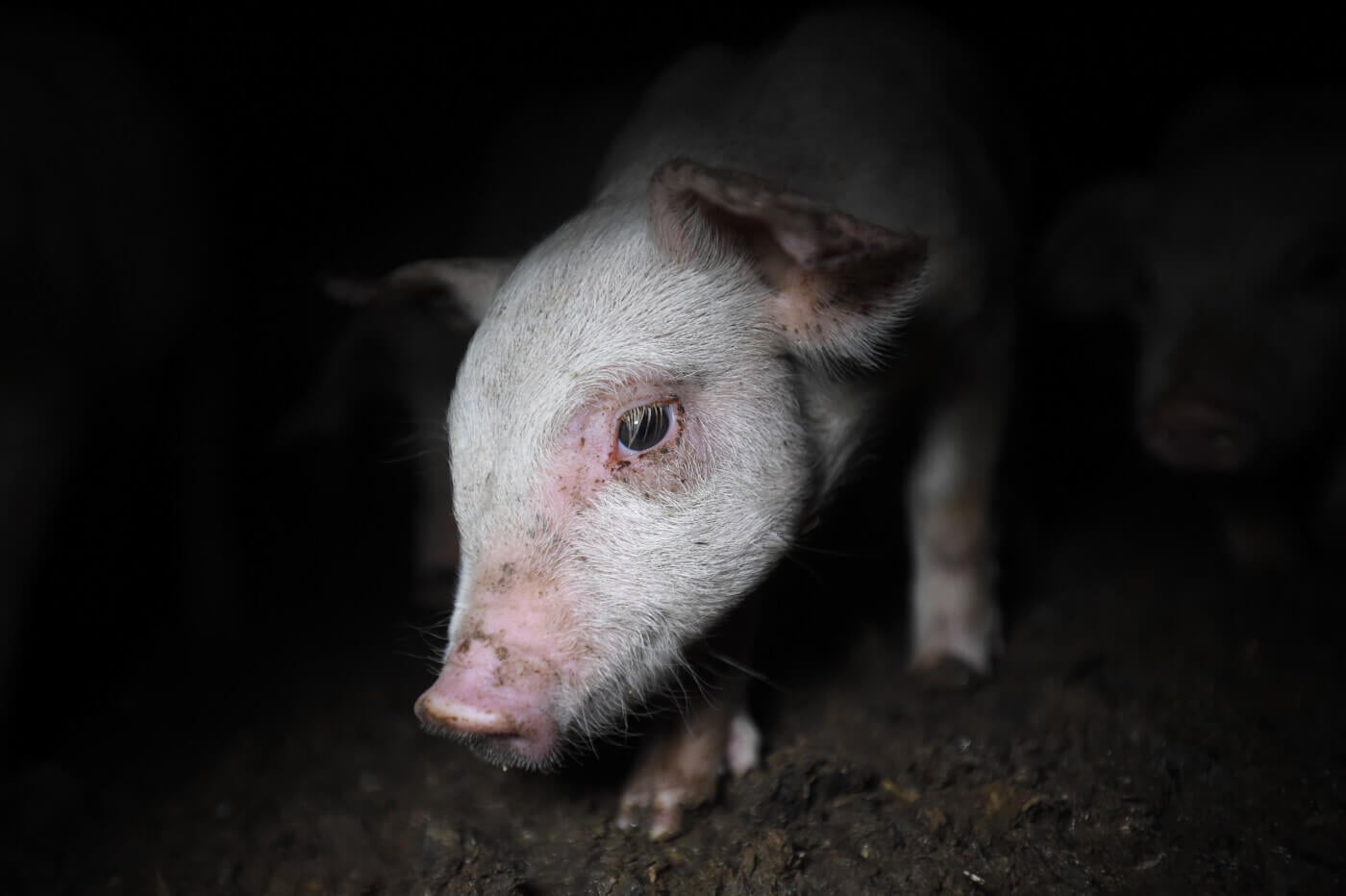
Discussion Questions
These questions are designed to move students beyond comprehension and into perspective-taking, empathy, inference, and discussion about the animals’ emotional experiences.
🐦 In response to “Caged Bird”:
- The caged bird sings “with a fearful trill.” What fears do you think he experiences, and what clues in the poem support your thinking?
- How might the caged bird feel when he watches the free bird “leap on the back of the wind”? Explain your answer using evidence from the poem.
- Why do you think the caged bird continues to sing despite living in a cage? What emotions might motivate their song?
- The poem says the caged bird’s wings are clipped and his feet are tied. How might these physical restrictions affect the bird emotionally?
- The caged bird sings of “things unknown but longed for still.” What do you think he longs for, and why are those desires important?
- How do the experiences of the free bird and the caged bird differ? How might each bird view the world differently because of those experiences?
- If the caged bird could speak directly to the free bird, what might he want the free bird to understand about his life and feelings?
🦃 In response to “Point of View”:
- Why do you think Silverstein invites readers to see things from the animal’s perspective?
- The poem asks readers to imagine life from the perspective of different animals. Which animal’s point of view can you most picture in your mind? What do you picture them thinking or feeling?
- How does considering the world through an animal’s eyes change the way we think about that animal’s feelings and experiences?
- What challenges or frustrations might the animals in the poem experience that humans often overlook?
- What experience do you think led the narrator to see “dinner from the dinner’s point of view”?
- What emotions might the animals feel when humans misunderstand or ignore their needs?
- How does imagining an animal’s point of view help readers develop empathy?
🐖 In response to “The Pig”:
- After eating the farmer, the pig “felt absolutely no remorse.” What does Dahl want us to think about when he tells us that the pig does not feel regret or guilt after eating the farmer?
- Throughout the poem, the pig is portrayed as intelligent and observant. How does this affect the way readers view the pig and his feelings?
- Before learning the truth about his future, how do you think the pig feels about his relationship with the farmer? What evidence supports your interpretation?
- How does the pig feel when he realizes that humans raise pigs to be slaughtered for food? Explain your answer using evidence from the poem.
- Dahl chooses to reveal the pig’s thoughts and reactions instead of telling the story only from a human perspective. What intended effect does this have on readers?
- At the end of the poem, who do you think readers are meant to sympathize with most—the pig or the farmer?
- If we understood the farmer’s emotions, fears, and thoughts, would the poem have the same or different impact on you?
Write Your Own Poem from an Animal’s Perspective
Assignment Overview
After reading and discussing the poems, “Caged Bird,” “Point of View,” and “The Pig,” students write an original poem from the perspective of a single animal.
Goal
Students need to help readers understand how that animal experiences the world and evoke empathy for the animal through their thoughts, feelings, observations, or experiences.
Animal Selection
Students could be assigned an animal, choose from a provided list, or independently select an animal they are not currently familiar with and want to learn more about.
As students write, they should consider:
- What does the animal see, hear, smell, feel, or experience?
- What challenges, fears, hopes, or desires might the animal have?
- How might the animal view humans or the world around them?
- What should readers understand or feel about the animal after reading the poem?
Requirements
- Write from the first- or third-person perspective of one animal. The presence of humans is optional.
- Demonstrate an understanding of the animal’s emotions, experiences, and point of view.
- Evoke empathy by helping readers connect with the animal’s feelings or circumstances.
- Include at least three of the following literary devices:
- Imagery
- Tone
- Symbolism
- Figurative language (e.g., simile, metaphor, hyperbole, idiom, onomatopoeia)
Optional Partner Share
Students share their poems and explain how the literary devices help readers understand and empathize with the animal.
Writing for Change: Letter to a Legislator
This authentic writing assignment helps students develop a wide range of English Language Arts skills, including research, critical reading, argumentation, evidence-based writing, and audience awareness. As students investigate an animal-related issue, they must evaluate sources, synthesize information, formulate a clear claim, and support their position with relevant evidence. With this assignment focused on the well-being of animals, students will be engaged and motivated to produce thoughtful, high-quality work. The possibility that their letter could influence an actual decision-maker further reinforces the relevance of strong communication skills and demonstrates how writing can be a powerful tool for civic participation and social change.
Assignment Overview
Laws and public policies can have a significant impact on animals. In this assignment, students will research a real, contemporary animal-related issue and write a persuasive letter to one of their elected representatives, such as a member of Congress, urging them to take action.
Goal
Students will inform their elected representative about the issue, explain why it matters, and persuade them to support a specific solution.
Step 1: Choose a Real, Contemporary Animal Issue
Select an animal-related concern that interests you. Conduct research using credible sources to learn about the issue, how it affects animals, and what actions lawmakers can take to address it.
Animal Issue Topic Ideas
- Animal testing (This is a popular topic among students.)
- Dogs chained up outside 24/7
- Puppy mills
- Factory farming
- Animals used in circuses or roadside zoos
- Fishing nets plastic pollution in oceans
- Protecting endangered species
- Animal skins and fur production
- Stronger animal cruelty laws
- Wildlife crossings
- Pollinator protection
- Exotic animal ownership
Step 2: Research the Issue
As you research, gather information about:
- The animals and the various ways they are affected
- The causes of the problem
- Current laws, policies, or practices related to the issue
- Proposed solutions
- Facts, statistics, and expert opinions that support your position
Be sure to evaluate sources for credibility and accuracy.
Step 3: Identify the Elected Representative
Decide which member of Congress to write to:
- Find Your Senators (choose one)
- Find Your Representative
Step 4: Write the Letter
Address your letter to an elected representative and include the following:
Introduction
- Introduce yourself.
- Clearly state the animal issue you are concerned about.
- Explain why you are writing.
Body Paragraphs
- Describe the problem and how it affects animals.
- Provide evidence from your research.
- Explain why the issue should matter to lawmakers and the public.
- Present a specific action you would like the representative to take.*
Conclusion
- Summarize your main points.
- Restate your request.
- Thank the representative for their time and consideration.
💡A persuasive letter is strongest when it asks an elected representative to take a clear action, such as:
- Vote for or against a bill.
- Sponsor or co-sponsor legislation.
- Increase funding for a program.
- Strengthen enforcement of an existing law.
- Introduce new legislation to address the issue.
Letters must:
- Be written in a respectful, professional tone.
- Include evidence from at least three credible sources.
- Present a clear claim and supporting reasons.
- Address a specific action or policy solution.
- Demonstrate proper letter format.
- Be approximately 500–750 words.
Step 4: Send the Letter (Note: Decide if you want students to actually submit letters.)
Using the elected representative’s online contact form, submit the letter.
Reflection
After completing the letters, students will write a brief reflection explaining:
- Why they chose that particular issue.
- What they learned during their research.
- Whether their views changed or became stronger after learning more about the topic.
- The action(s) they hope the elected representative will take.
🌏 Support for Multilingual Learners (ELLs/MLLs)
Often, when students become impassioned about an animal-focused issue, their determination to spread the message of compassion for animals overrides any anxiety they may feel when speaking in their new language. The topic of dogs being forced to live chained up and outdoors 24/7 will most likely provoke strong opinions about how all animals–including humans–should be treated.
Introduce English language learners the lives of chained backyard dogs.

🎥 Watch this one-minute video together as a class.
🗣️ Have a whole-class discussion that invites students to share their responses to the video.
📄 Read this article, “A Day in the Life of a PETA Fieldworker,” aloud to the class, or students can volunteer to popcorn read. Tip: Pause throughout the article reading to check for comprehension, define vocabulary words, and answer questions.
🗣️ Have a whole-class discussion that invites students to share their responses to the article.
✅ Small Group Discussion & Notetaking
In small groups, students will read and respond to the following questions verbally or in writing. As an option, create heterogeneous groups by including students with different language proficiency levels in each group.
- Why do some people keep their dogs chained outside instead of keeping them indoors with their families?
- How does being chained outside affect dogs? What are three sad or difficult things that dogs experience when they’re chained outside?
- Should there be consequences for humans who don’t provide the animals they’re responsible for with adequate care? Explain your answer.
- What consequences should there be for humans who keep dogs chained outside?
Informational Writing
While referencing their notes, students will write an informational piece in response to this prompt:
Why should dogs never be forced to live chained up and outdoors 24/7?
Speech Writing
After students have explored their thoughts and opinions verbally and in writing about dogs who are forced to live chained up and outdoors 24/7, they could write a mock speech to let others know how difficult life is for these dogs.
🗪 Debate
Animal-focused topics provide meaningful opportunities for students to engage in debate because they spark curiosity, emotion, and thoughtful discussion. These debate kits encourage students to consider how human decisions affect animals and whether current practices are fair, ethical, and respectful to animals. By connecting argumentation activities to issues they care about and can relate to, students become more invested in the task at hand—they will want to research, discuss, and write.
💡 Teacher Tip: These debate kits can be used as stand-alone activities or integrated into larger inquiry or research units. Encourage students to support every claim with credible evidence and thoughtfully consider opposing viewpoints throughout the debate process.
TeachKind’s ready-to-use, standards-aligned debate kits can be easily integrated into a variety of subjects, including:
Each kit challenges students to evaluate evidence, consider multiple perspectives, strengthen critical thinking and argumentation skills, and develop informed opinions about issues that directly affect animals’ lives and well-being, such as the use of animals in experimentation, the seal slaughter, spaying and neutering companion animals, and the ethics of eating meat.
Students are guided through a structured research and argumentation process using a wide variety of curated, evidence-based resources.
Debate Kits Include:
Background readings that introduce the issue and help students become “experts” on the topic.
Research articles and investigative reports that provide scientific findings, historical context, and factual evidence.
News articles and case studies highlighting real-world examples and current events.
Expert testimony and interviews from scientists, veterinarians, former industry professionals, and other subject-matter experts.
Videos, documentaries, and witness accounts that illustrate the issue from multiple perspectives.
Data, infographics, and visual evidence to support claims with statistics and documented examples.
Reference materials for deeper research.
Guidance for anticipating counterarguments and preparing rebuttals, encouraging students to evaluate opposing viewpoints and strengthen their reasoning.
Solution-focused resources that explore ethical alternatives and encourage students to propose evidence-based recommendations.
Browse TeachKind Debate Kits
🐵 “Should Animals Be Used in Experiments?”
🦭 “Should the Commercial Seal Slaughter Be Stopped?”
🐶 “Should All Companion Animals Be Spayed and Neutered?”
🐮 “Is It Ethical to Eat Animals?”
🌍 “Is Animal Agriculture Harmful to the Environment?”
🐬 “Should Marine Mammals Be Held in Amusement Parks?”
😺 “Are ‘No-Kill’ Policies Killing Animals?”
Ways to Incorporate Debate Kits into Your Curriculum
✍🏽 English Language Arts
✅ Argumentative Writing
Students choose a debate kit topic as the foundation for a formal argumentative essay.
Students can:
- Develop a claim supported by evidence
- Address counterclaims
- Evaluate the credibility of sources
- Cite evidence correctly
- Revise after expanding their thinking from participating in a peer-to-peer debate
✅ Rhetorical Analysis
Students analyze:
- persuasive techniques
- logical fallacies
- emotional vs. logical appeals
- author’s credibility
- audience awareness
- effectiveness of evidence
✅ Speaking & Listening
To strengthen public speaking and active listening skills, students participate in:
- Oxford-style debates
- Socratic seminars
- observation discussions (a student-led discussion strategy, split into an inner circle talking about a topic and an outer circle actively listening and observing)
- panel discussions
- town hall meetings
These activities can be used in addition to a writing assignment, or on their own as a summative assignment following a research project.
✅ Research Skills
The kits can launch an inquiry project where students:
- investigate additional sources
- evaluate bias
- distinguish fact from opinion
- synthesize multiple perspectives
- create annotated bibliographies
🔬 Science
The following debate kits pair especially well:
✦ “Should Animals Be Used in Experiments?”
✦ “Is Animal Agriculture Harmful to the Environment?”
✦ “Should Marine Mammals Be Held in Amusement Parks?”
✅ Animal Experiments
Can accompany units on:
- scientific ethics
- medical research
- biotechnology
- biomedical innovation
Students investigate and debate the ethics and effectiveness of using non-animal models in scientific research.
✅ Animal Agriculture
Fits into lessons about:
- ecosystems
- climate catastrophe
- loss of biodiversity
- land use
- resource management
Students can analyze environmental data before debating solutions.
✅ Marine Mammals Used for Entertainment
Supports units on:
- ethics
- animal behavior
- marine biology
- conservation
Students compare the behaviors and physical and psychological health of marine animals in the ocean with those observed in sea parks.
🌍 Environmental Studies
The following debate kits pair especially well:
✦ “Is Animal Agriculture Harmful to the Environment?”
✦ “Should the Commercial Seal Slaughter Be Stopped?”
✦ “Should Marine Mammals Be Held in Amusement Parks?”
✅ Animal Agriculture
Fits into lessons about:
- climate catastrophe
- ecosystems
- biodiversity loss
- sustainable food systems
- resource management
Students can analyze environmental data and explore how food production affects land, water, wildlife, and greenhouse gas emissions before debating possible solutions.
✅ Commercial Seal Slaughter
Supports units on:
- wildlife health and populations
- marine ecosystems
- conservation
- biodiversity
- human impacts on the environment
Students examine the ecological role of seals, evaluate conservation concerns, and consider how human activities affect marine ecosystems.
✅ Marine Mammals Used for Entertainment
Connects with studies of:
- marine ecosystems
- conservation
- biodiversity
- human impacts on wildlife
- environmental ethics
Students investigate the ecological roles of marine mammals and compare the needs and behaviors of animals in the wild with those in captivity while discussing whether confining intelligent, social animals for entertainment can be justified
🏛️ Government & Civics
The following debate kits pair especially well:
✦ “Should Marine Mammals Be Held in Amusement Parks?”
✦ “Should Animals Be Used in Experiments?”
✦ “Should All Companion Animals Be Spayed and Neutered?”
Students explore how federal, state, and local laws and public policy are developed, implemented, and changed.
Topics include:
- animal protection legislation
- federal and state regulations
- local ordinances
- citizen advocacy
- public policy and civic engagement
✅ Government & Public Policy
Supports units on:
- legislative processes
- public policy
- civic participation
- federalism
- the role of government
Students examine how laws affecting animals are created and enforced, and evaluate whether existing protections safeguard animals from exploitation and harm.
✅ Students could:
- draft legislation
- testify before a mock legislative committee
- write policy briefs
- conduct mock public hearings
📜 History
The following debate kits pair especially well:
✦ “Is Animal Agriculture Harmful to the Environment?”
✦ “Should Animals Be Used in Experiments?”
✦ “Is It Ethical to Eat Animals?”
Students explore how attitudes toward the use of animals have evolved throughout history.
✅ Animal Agriculture
Connects with studies of:
- agricultural history
- industrialization
- environmental change
- food systems
- technological innovation
Students examine how agricultural practices have evolved over time and evaluate their environmental and societal impacts.
✅ Animal Experiments
Supports units on:
- medical history
- scientific advancement
- ethics in history
- technological innovation
- public policy
Students investigate how scientific research has changed over time, exploring historical breakthroughs alongside evolving ethical standards and more effective alternatives to animal experimentation.
✅ Eating Animals
Fits into lessons about:
- cultural traditions
- changing societal values
- social reform movements
- ethics throughout history
- human-environment interactions
Students compare historical and modern perspectives on eating animals, examining how cultural norms, laws, and public attitudes have evolved over time. This debate kit could accompany a reading unit of Upton Sinclair’s The Jungle.
🧠 Psychology
The following debate kits pair especially well:
✦ “Is It Ethical to Eat Animals?”
✦ “Should Animals Be Used in Experiments?”
Students investigate how beliefs, emotions, biases, and social influences shape the ways people think about and behave toward animals.
✅ Speciesism
Supports units on:
- cognitive dissonance
- prejudice and discrimination
- exploitation
- moral reasoning
- empathy
- social identity
Students examine how beliefs, biases, and social norms shape attitudes toward different species and influence moral decision-making.
✅ Eating Animals
Fits into lessons about:
- cognitive dissonance
- decision-making
- attitudes and behavior
- social influence
- moral development
Students explore why people often hold conflicting beliefs and behaviors toward animals—for example, why many people love dogs and cats while eating chickens or wearing the skins of cows.
✅ Animal Experiments
Connects with studies of:
- ethical decision-making
- empathy
- moral development
- critical thinking
- psychological perspectives on behavior
Students evaluate how psychological factors, ethical frameworks, and personal values influence opinions about using animals in scientific research.
⚖️ Ethics and Philosophy
The following debate kits pair especially well:
✦ “Is It Ethical to Eat Animals?”
✦ “Should Animals Be Used in Experiments?”
✦ “Should Marine Mammals Be Held in Amusement Parks?”
Students examine ethical questions by applying philosophical frameworks, evaluating evidence, and defending their positions with reasoned arguments.
✅ Speciesism
Supports units on:
- ethics
- moral philosophy
- justice
- equality
- discrimination
Students examine why favoring one species over another is morally unjustifiable and compare speciesism with other forms of bias and discrimination.
✅ Eating Animals
Fits into lessons about:
- applied ethics
- moral responsibility
- universalism
- rights-based ethics
- virtue ethics
Students analyze philosophical arguments against eating animals while evaluating competing ethical frameworks.
✅ Animal Experiments
Connects with studies of:
- bioethics
- scientific ethics
- utilitarianism
- deontology
- moral reasoning
Students examine the ethical concerns about using animals in experiments.
✅ Marine Mammal Captivity
Supports units on:
- animal ethics
- rights
- environmental ethics
- personhood
- moral responsibility
Students argue that keeping marine mammals in amusement parks is unethical by considering arguments about autonomy, conservation, and human responsibility.
📰 Journalism & Media Studies
The following debate kits pair especially well:
✦ “Is It Ethical to Eat Animals?”
✦ “Should Animals Be Used in Experiments?”
✦ “Is Animal Agriculture Harmful to the Environment?”
Students analyze how media, language, storytelling, and public messaging shape perceptions of animals and influence public debate.
✅ Eating Animals
Supports units on:
- media framing
- bias and perspective
- persuasive writing
- investigative journalism
- ethical reporting
Students examine how food systems are represented in the media and evaluate how word choice, imagery, and storytelling influence public attitudes.
✅ Speciesism
Fits into lessons about:
- representation and stereotypes
- media bias
- social movements
- opinion writing
- audience analysis
Students investigate how different groups and issues are portrayed in the media and consider how messaging can shape beliefs about animals.
✅ Animal Experiments
Connects with studies of:
- science communication
- source evaluation
- misinformation
- ethical reporting
- public opinion
Students analyze how scientific research involving animals is communicated to the public and evaluate the credibility and framing of different perspectives.
✅ Animal Agriculture
Supports units on:
- environmental journalism
- investigative reporting
- misinformation
- data visualization
- persuasive campaigns
- media literacy
Students evaluate how environmental impacts of food production are reported and use evidence from multiple sources to develop informed arguments.
🌏 Support for Multilingual Learners (ELLs/MLLs)
Debate kits can be adapted to support multilingual learners by providing vocabulary instruction, background knowledge, accessible research materials, graphic organizers, and structured discussion supports. Teachers can use sentence frames, collaborative activities, and differentiated assignments to help all students engage in evidence-based argumentation while developing academic language skills.
Build Background Knowledge Before Reading
- Introduce key concepts using images, videos, and short summaries before assigning readings.
- Provide a brief overview of the issue and essential vocabulary.
- Use graphic organizers to help students organize what they already know and what they want to learn.
- Connect topics to students’ personal experiences, cultures, and perspectives.
Example: Before debating marine mammal captivity, students can examine images of dolphins in the wild and in amusement parks and discuss observations using sentence frames.
Support Vocabulary Development
- Provide student-friendly definitions and examples.
- Create vocabulary charts with words, visuals, translations, and related terms.
- Encourage students to use new vocabulary during discussions and writing.
Some vocabulary terms to preview per subject:- Science: biodiversity, ecosystem, hypothesis, alternative methods
- Government: legislation, regulation, policy, advocacy
- Ethics: morality, justice, responsibility, rights
- Media: bias, credibility, perspective, audience
Example: Before debating marine mammal captivity, students can examine images of dolphins in the wild and in amusement parks and discuss observations using sentence frames.
Provide Accessible Research Materials
- Offer readings at multiple reading levels.
- Highlight important evidence within articles.
- Provide summaries alongside more complex texts.
- Incorporate the use of multimedia sources, such as videos, interviews, and infographics.
- Teach strategies for identifying claims, evidence, and reasoning.
Students can still engage in the same debate questions while accessing information through different formats.
Use Graphic Organizers to Structure Thinking
Offer Language Supports for Discussion and Debate
- Sharing an opinion:
- “I believe ___ because ___.”
- “One reason to support this position is ___.”
- Adding evidence:
- “According to the article, ___.”
- “The evidence suggests ___.”
- Responding to another perspective:
- “I understand your point that ___; however, ___.”
- “One counterargument is ___, but ___.”
Allow Multiple Ways to Demonstrate Understanding
- Students can show learning through:
- written arguments
- oral presentations
- visual presentations or infographics
- recorded speeches
- collaborative debates
- annotated evidence charts
- responses in their home language(s), when appropriate
Students can still engage in the same debate questions while accessing information through different formats.
Encourage Collaborative Learning
- Use partner discussions before whole-class debates.
- Assign students different roles (researcher, evidence finder, discussion leader, summarizer).
- Allow students to rehearse arguments before presenting.
- Use small-group debates before formal debates.
Ways to Differentiate Debate Expectations
- Teachers are encouraged to consider adjusting:
- the number of sources students analyze,
- the complexity of required evidence,
- the length of written responses,
- the amount of speaking required, and, or
- whether students debate independently or with a partner/group.
💡Tip: Emerging English learners might identify and explain evidence from provided sources, while more advanced learners synthesize multiple sources and address counterarguments.
🧠 Rhetorical Analysis
Rhetorical analysis helps students become more discerning critical thinkers, readers, and writers by examining how language, visuals, and persuasive techniques influence an audience. As students explore these concepts through the lens of how animals are perceived and treated, their motivation and engagement naturally increase.
By analyzing advertisements, speeches, articles, writing prompts, and language-focused activities centered on animals, students strengthen their analytical thinking, communication, and media literacy skills, in turn, deepening their academic engagement and preparing for informed civic participation.
💡 Teacher Tip: Encourage students to focus on how authors and speakers persuade their audiences rather than whether they agree with the message. Analyzing rhetorical choices, evaluating evidence, and discussing multiple perspectives will strengthen students’ critical thinking and communication skills.
How do persuasive messages influence public opinion?
In this lesson, students analyze authentic animal-focused advertising campaigns, examining how visual imagery, word choice, audience, and rhetorical appeals work together to challenge assumptions and inspire action.
✅ Compare and contrast the messaging in these two dairy ads.

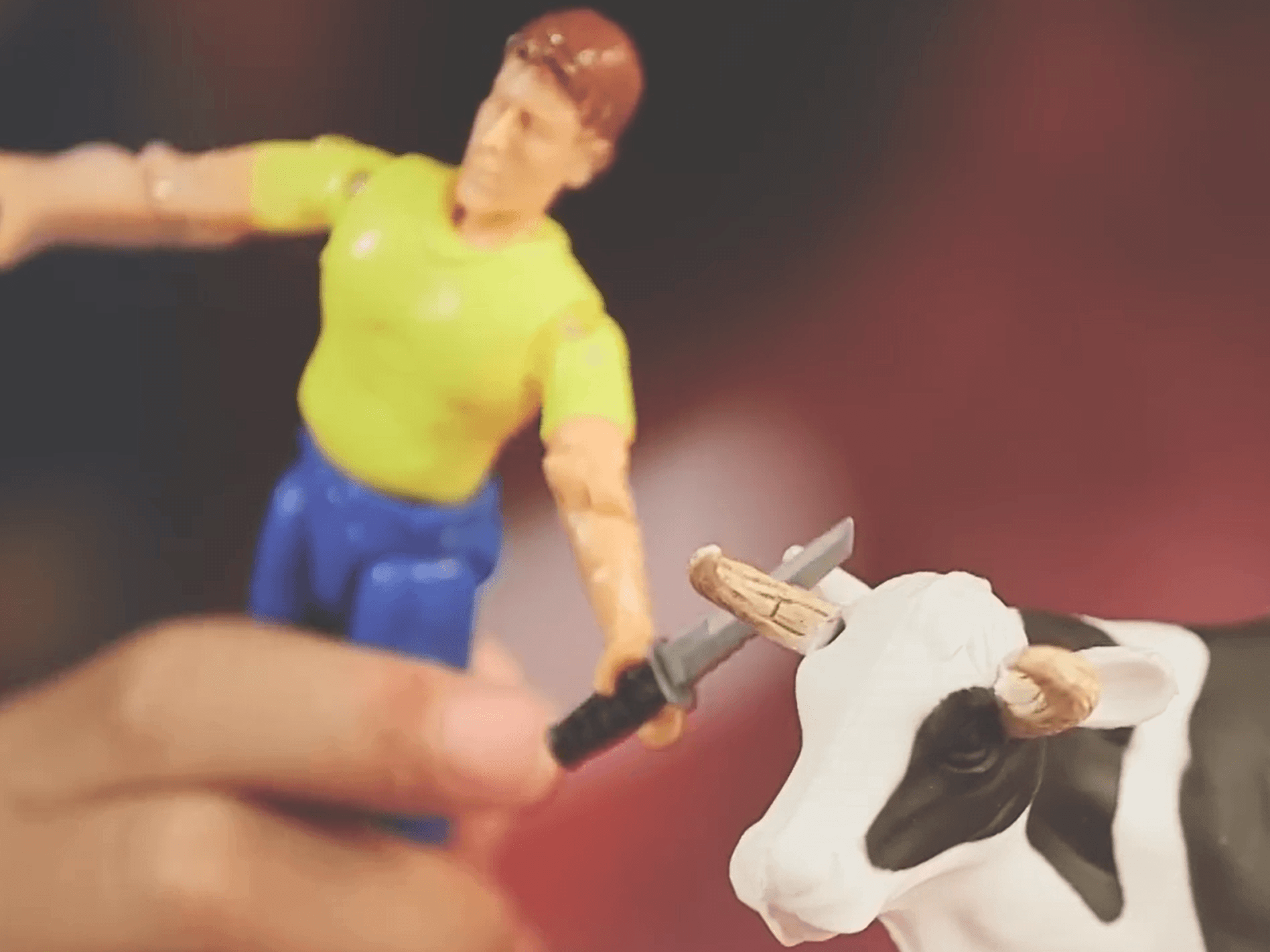
Extend the rhetorical analysis by identifying the appeals to ethos, pathos, and logos within each advertisement.
✅ Advertisement Analysis
Directions: Examine the following advertisements and answer the questions that follow.
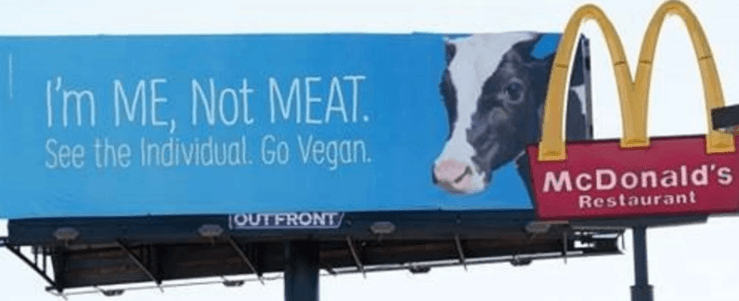
- Describe what is going on in this image with the juxtaposition of the billboard and the McDonald’s sign.
- How do you feel when you look at the ad? How do you feel when you look at the image as a whole?
- How would you feel if you saw this ad on your way to buy a hamburger?
- What effect does the first-person perspective of this advertisement have on the audience?
- What is the intended response from this advertisement?
- Describe the cognitive dissonance the family members are experiencing.
- Did you experience a sense of unease in the way the family members did?
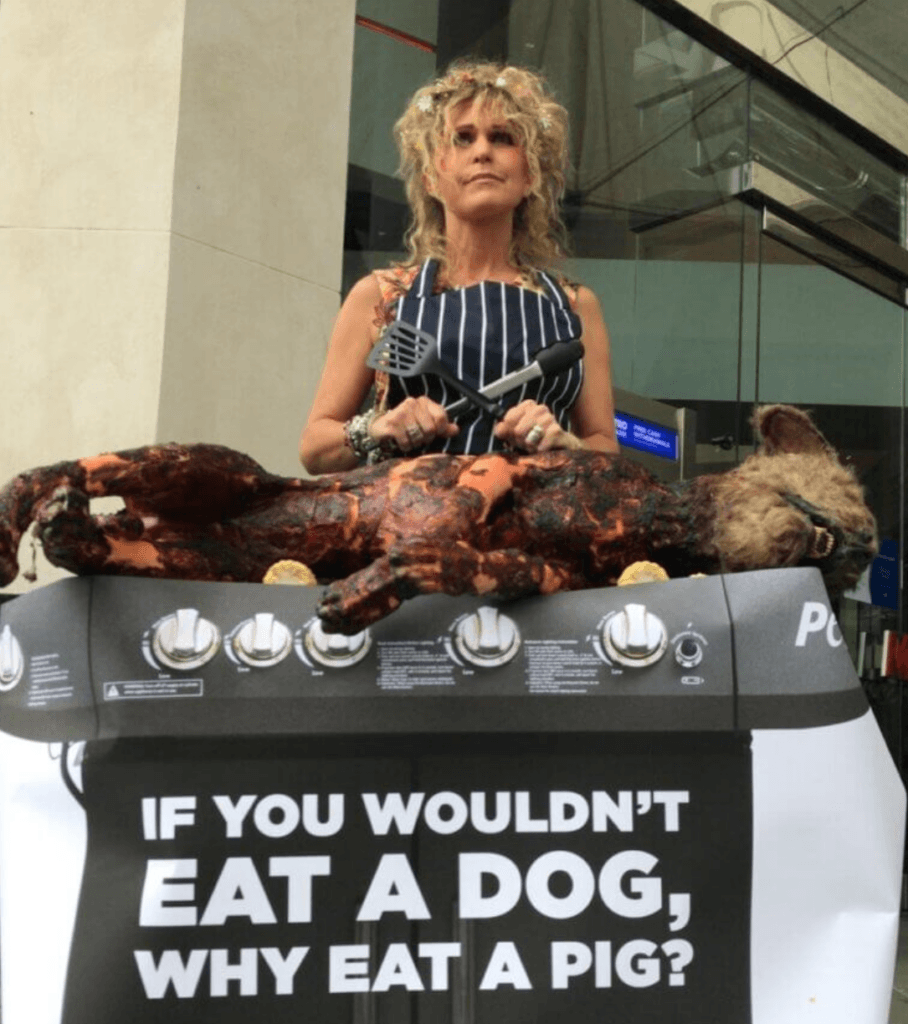
- What emotional response is elicited from this demonstration?
- How do you think people reacted to this?
- Would the message be effective without the visual of the dog?
- What questions are elicited from this demonstration?
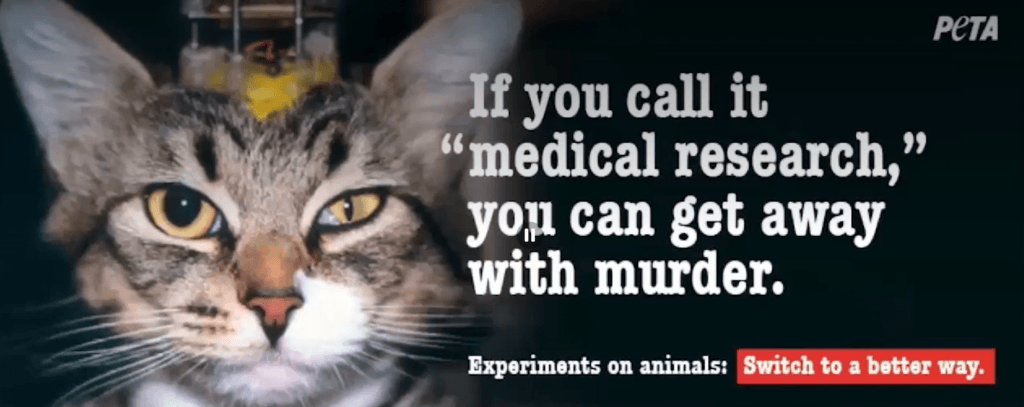
- How does this advertisement appeal to our sense of reasoning, or logos?
- What does the idiom “get away with murder” mean? What effect does this phrase have on the intended goal of the advertisement?

After viewing this library of celebrity endorsement advertisements, answer the following questions:
- Why are celebrities used in advertisements?
- What effect do celebrity endorsements generally have on you?
- What effect does the text in the advertisement have?
Choose an advertisement from this image library that catches your attention. Explain how it persuades its audience by appealing to:
logic (logos): What facts, evidence, or reasoning does it use?
emotion (pathos): What feelings does it try to evoke?
credibility (ethos): How does it establish trust or authority?
✅Cognitive Dissonance and How We Treat Animals
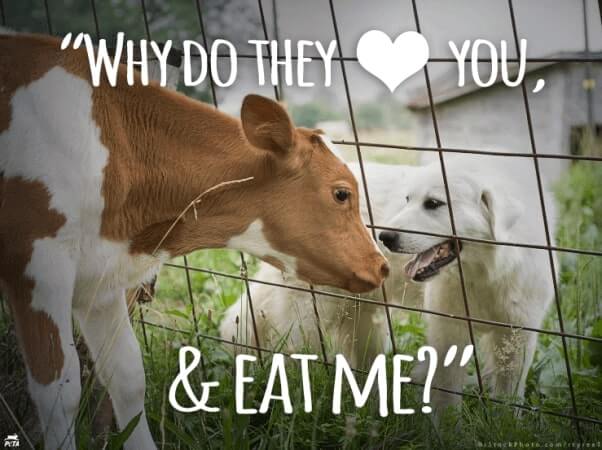
Dive deeper into the power of words and behavior by exploring the topic of cognitive dissonance. Give students the opportunity to understand that what we think and say may not always match our actions.
Poem Analysis: “RZA: We’re Not Different in Any Important Way”
From this activity, students will further understand how rhetorical choices build a cohesive, persuasive argument as they move from comprehension → analysis → evaluation → application.
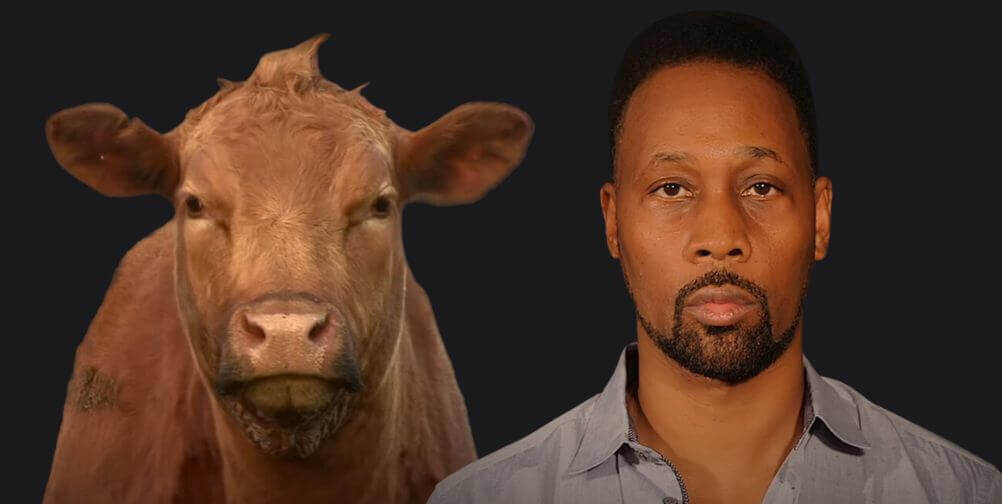
✅ Watch Then Listen to the Poem
1. Watch “RZA: We’re Not Different in Any Important Way.”
2. Then, listen to the video while reading a physical copy of the poem text.
The following activities can stand alone or work together as a complete lesson.
✅ Initial Response
Have students respond to the following prompts on the back of their copy of the poem:
- What line stands out to you most? Why?
- What emotions does the poem evoke?
- What do you think the speaker wants the audience to believe or do?
✅ Poem Annotation
Students label the following on their copy of the poem:
- Repeated words or phrases
- Strong emotional language
- Contrasts
- Inclusive language (“we,” “all”)
- Calls to action
- Lines they think are especially persuasive
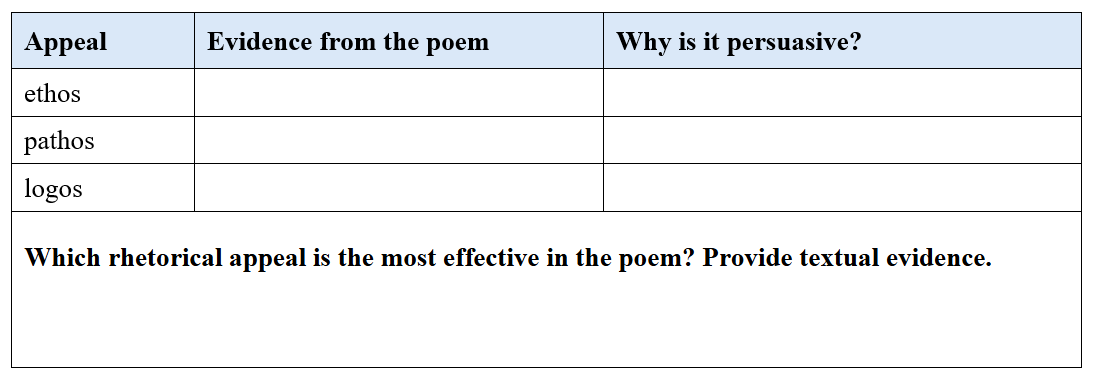
✅ Identify Rhetorical Appeals
Students will explain how each rhetorical appeal works within the poem by drawing this chart on the back of their copy of the poem, in their notebooks, or on a separate sheet of paper.
Students can work independently or with a partner on this chart.
✅ Recognizing Rhetoric Beyond the Written Text
Analyze Delivery
- How does the speaker’s pace influence the message?
- Which words receive emphasis?
- How does tone affect the audience?
- Would the poem have the same impact if you only read it silently?
Analyze Structure
- How does the poem begin?
- How does the message develop?
- Why does the poet end with “Our task must be…”?
- How does the ending strengthen the argument?
✅ Partner Discussion
Students will verbally respond to some of the following questions with a partner or in small groups:
- Who is the intended audience?
- Which line serves as the poem’s thesis? Explain your choice.
- How does the repeated use of “we” shape the speaker’s relationship with the audience?
- Why does the poet begin with physical differences before shifting to shared experiences?
- How does sentence length influence the rhythm and persuasiveness of the poem?
- What assumptions does the speaker expect the audience to accept?
- Which rhetorical choice contributes most to the poem’s effectiveness, and why?
✅ Written Response
Students write two paragraphs in response to the following prompts:
- Explain how the poet uses rhetorical appeals and rhetorical strategies to persuade the audience that all living beings deserve respect. Use evidence from the text.
- Write a second paragraph that explains why all living beings deserve respect. Use evidence from real life situations you have experienced, witnessed, or heard about.
From Rhetorical Analysis to Argument: Why It Is Unethical to Use Animals
By exploring the concept of speciesism and evaluating how authors use evidence, analogies, and rhetorical appeals to persuade audiences, students deepen their critical thinking and learn to evaluate complex ethical issues through multiple perspectives. These activities encourage meaningful discussions about fairness, empathy, and the treatment of animals, helping students connect literacy skills to authentic issues that inspire thoughtful reflection and civil discourse.
✅ Begin with the Concept Web
1. Students define sexism, racism, ableism, and speciesism and discuss what these concepts have in common.
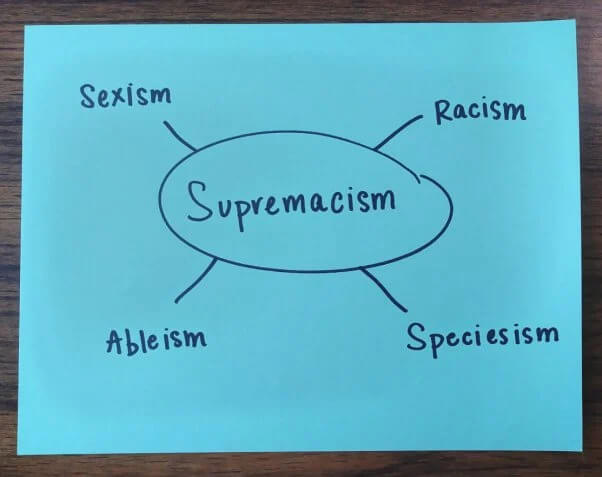
2. Students answer the following question together as a whole class or in small groups:
Why might an author or speaker choose to compare speciesism to other forms of discrimination?
3. Students now will consider the rhetorical purpose of this comparison by addressing these questions.
- What claim is the author or speaker making?
- Why compare these concepts?
- Who is the intended audience?
- How might different audiences react?
✅ Analyze a Persuasive Text Instead of Jumping to Conclusions
🐶🐷 Students will read a thought-provoking article that challenges them to think about something that may seem invisible because it is such a common part of daily life. Because the topic is personally relevant and connected to decisions students encounter every day, engagement naturally skyrockets. The article helps students recognize that what feels “normal” is still a choice and invites them to reflect on the decisions they make and the role society plays in shaping them.
While reading, students will annotate:
- central claim
- intended audience
- purpose
- evidence
- appeals to ethos, pathos, and logos
- word choice
- analogies
- emotional language
- counterarguments (or lack thereof)
✅ Turn the Speciesism Discussion into Rhetorical Analysis
Students independently respond to the following questions writing.
Then, students discuss their responses in small groups.
- What evidence supports the article’s claim?
- What assumptions does the argument rely on?
- What analogy is being used?
- Why is this comparison being made?
- What additional evidence would strengthen the argument?
✅ The Persuasive Essay
After students have read “Why Are We Outraged About Eating Dog but Not Bacon?”, present these rhetorical essay prompts. Students will choose one prompt to respond to in academic essay format.
Analyzing Rhetorical Appeals
Within the article, the author uses appeals to emotion, logic, and credibility to challenge readers’ assumptions about eating certain animals. Write an essay analyzing how the author uses ethos, logos, and pathos to persuade the audience. Which rhetorical appeal is most effective, and why? Support your analysis with specific evidence from the article.
Examining Audience and Purpose
Effective writers carefully consider their audience when constructing an argument. Identify the article’s purpose and analyze how the author tailors the article to a general audience. Consider the author’s word choice, tone, examples, and organization. How do these rhetorical choices help the author accomplish the article’s purpose? Use evidence from the text to support your analysis.
Evaluating the Use of Comparison and Analogy
One of the central rhetorical strategies in the article is comparing people’s reactions to eating dogs with their reactions to eating pigs. Write an essay analyzing how the author uses comparison and analogy to develop the argument. How does this strategy encourage readers to reconsider their beliefs? Evaluate whether the comparison strengthens the author’s argument, supporting your ideas with textual evidence.
Analyzing Counterarguments and Persuasion
Strong arguments often acknowledge opposing viewpoints before responding to them. Analyze how the author addresses potential counterarguments throughout the article. What opposing perspectives are introduced, and how does the author respond to them? Evaluate how effectively these rebuttals strengthen the overall argument.
Rhetorical Strategies and Overall Effectiveness
Authors often combine several rhetorical techniques to persuade readers. Write an essay analyzing two or three rhetorical strategies the author uses in the article (such as rhetorical questions, evidence, comparisons, diction, tone, anecdotes, or appeals). Explain how these strategies work together to support the author’s central claim, and evaluate the overall effectiveness of the argument using evidence from the text.
Animal-Friendly Idioms
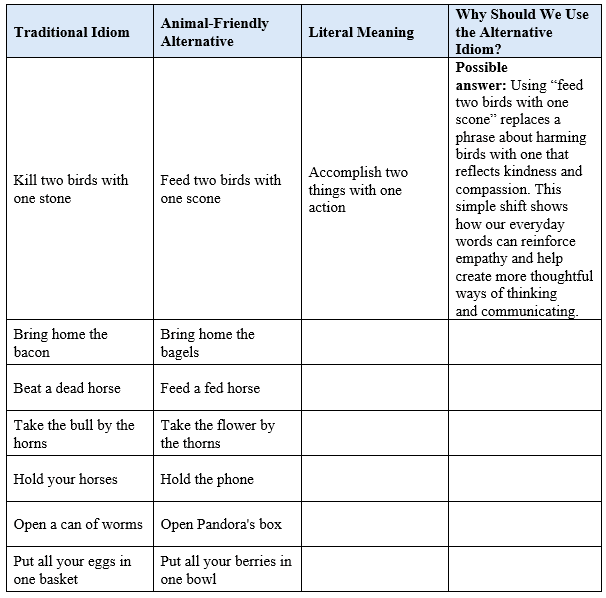
By studying animal-friendly idioms, students are encouraged to think critically about the power of language as they examine familiar idioms through the lenses of figurative language, rhetoric, and social change. Students will analyze how everyday expressions can reinforce attitudes toward animals while creating compassionate alternatives, strengthening their communication, critical thinking, and discussion skills. This lesson demonstrates that even small changes in language can reflect and promote kindness, encouraging students to become more thoughtful and intentional communicators.
✅ Spark Curiosity
Display several familiar idioms:
- Kill two birds with one stone
- Bring home the bacon
- Beat a dead horse
- Take the bull by the horns
Ask students:
- What do these expressions actually mean?
- Have you ever stopped to think about the literal images they create?
- Why do you think these expressions have lasted for so long?
Tell students that today they’ll examine not only what idioms mean, but also what messages they may unintentionally communicate.
✅ Mini-Lesson: What Is an Idiom?
Review that an idiom is a figurative expression whose meaning differs from the literal meanings of its words.
Explain that language changes over time to reflect changing social values.
➡️ Stanford University’s “Elimination of Harmful Language Initiative” provides examples of outdated or offensive expressions that are no longer widely accepted because language evolves alongside culture.
➡️ Introduce some TeachKind animal-friendly alternatives.
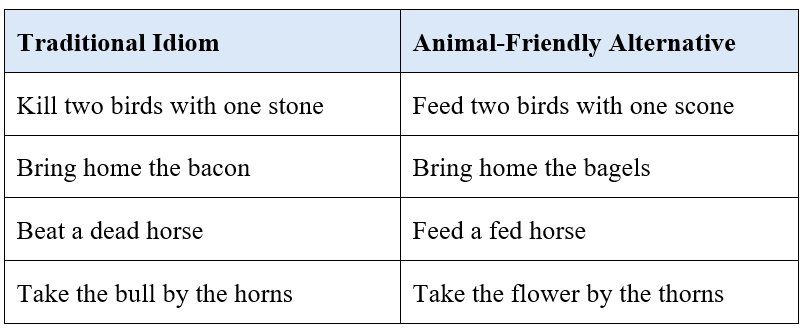
Ask students:
- How do these alternatives communicate the same ideas that traditional idioms communicate?
- What are your thoughts on the animal-friendly alternatives?
- Why might people be encouraged to use the animal-friendly alternatives in place of traditional idioms?
➡️ This TeachKind language guide helps educators recognize how harmful and demeaning language can contribute to a culture of bullying and normalize disrespect toward others. By examining the words we use and the attitudes they reinforce, educators can help students understand the impact of their language and promote a more respectful, compassionate classroom community..
✅ Activity 1: Language Investigation
Divide students into small groups to investigate each idiom.
Students complete the following chart, focusing on why traditional idioms need to be replaced with animal-friendly idioms.
✅ Activity 2: Write Your Own and Defend
1. Students review the list of traditional idioms that reinforce negative stereotypes about animals.
Traditional Unfriendly Animal Idioms
- Birdbrain
- Cash cow
- Chicken out
- Dog-and-pony show
- Dirty rat
- Eat like a pig
- Guinea pig
- Hold your horses
- Let the cat out of the bag
- More than one way to skin a cat
- Pigheaded
- Scaredy-cat
- Snake in the grass
- Stubborn as a mule
- Treated like animals
- Ugly as a toad
- Wild goose chase
- Work like a dog
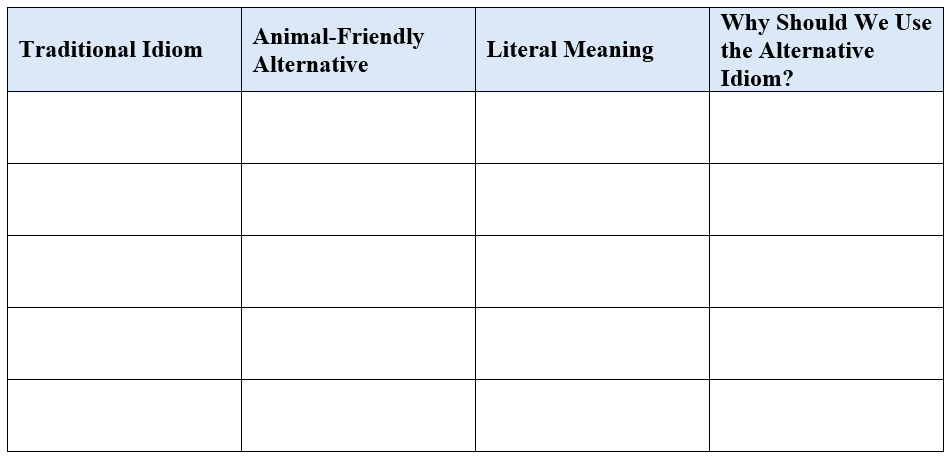
2. Students select five idioms from the Traditional Unfriendly Animal Idioms list and create animal-friendly alternatives by completing the following chart:
✅ Reflection
1. In a full class discussion, ask students:
- Does changing familiar language actually matter?
- Can language shape culture, or does culture shape language?
- Why should authors and speakers intentionally choose compassionate language?
Encourage students to support their opinions with examples from the lesson.
2. Respond to the following prompts:
- Explain how language influences how people think.
- Describe why you think replacing traditional idioms with animal-friendly idioms is important. Which animal-friendly alternative idioms do you see yourself using?
✅ Extension Activities
Creative Writing
Write a short story using three newly created animal-friendly idioms naturally in context.
Media Analysis
Collect five examples of animal-related language from advertisements, television, music, or social media. Analyze whether each portrays animals positively, negatively, or neutrally.
✅ Differentiation Support
- Provide definitions of unfamiliar idioms.
- Offer sentence stems for discussion and written responses.
- Pair students strategically for collaborative work.
🌏 Support for Multilingual Learners (ELLs/MLLs)
When teaching rhetorical analysis to ELLs and MLLs, supports should reduce language barriers while keeping the cognitive demand high. The goal is to help students analyze how and why an author makes rhetorical choices, not simplify the analysis itself.
Vocabulary Supports
Provide a rhetorical analysis word bank with student-friendly definitions:
- claim: the author’s main argument or position
- purpose: the reason an author created a text
- audience: the people the author wants to influence
- tone: the author’s attitude toward the topic
- evidence: information used to support a claim
- appeal: a strategy used to persuade an audience
- ethos: establishing trust or credibility
- pathos: appealing to emotions
- logos: appealing to logic or reasoning
- counterargument: an opposing viewpoint
Annotation Supports
Provide students with a color-coded annotation guide, giving students a concrete way to interact with complex texts.
🟨 Highlight the author’s claim
🟦 Underline evidence
🟩 Circle emotional language (pathos)
🟧 Box facts/statistics (logos)
🟪 Star credibility statements (ethos)
Sentence Frames for Discussion and Writing
Identifying rhetorical choices
- The author uses ______ to persuade the audience that ______.
- The author appeals to ______ by ______.
- The author’s purpose is to ______.
- The intended audience is ______ because ______.
Analyzing effectiveness
- This strategy is effective because ______.
- The author’s use of ______ strengthens the argument by ______.
- Readers may respond to this strategy by ______.
Comparing Ideas
- Both ______ and ______ address ______, but they differ because ______.
- The author compares ______ to ______ in order to ______.
Chunking the Text
Have students analyze texts in pieces, having them address the following questions before continuing the reading. This allows students to practice one skill at a time without feeling overwhelmed.
- Read the introduction only:
- What is the author’s claim?
- Who is the audience?
- What is the author’s purpose?
- Read one body paragraph:
- What evidence is used?
- Which rhetorical appeal is present?
- Read the conclusion:
- How does the author leave the audience thinking or feeling?
- What are you final thoughts and feelings after reading the article?
Provide Models and Mentor Texts
Before analyzing a complex argument, show students a short, familiar example, such as an advertisement about adopting a shelter pet.
Ask:
- What is the message?
- Who is the audience?
- What emotion does it create?
- What evidence would make this argument stronger?
Collaborative Supports
- Pair students strategically for think-pair-share discussions.
- Allow students to discuss ideas first in their home language when possible.
- Assign roles during group analysis:
- Claim Finder
- Evidence Collector
- Appeal Identifier
- Audience Analyst
Graphic Organizers
Text Title:
Author/Speaker:
Author’s Main Claim:
Intended Audience:
Author’s Purpose:
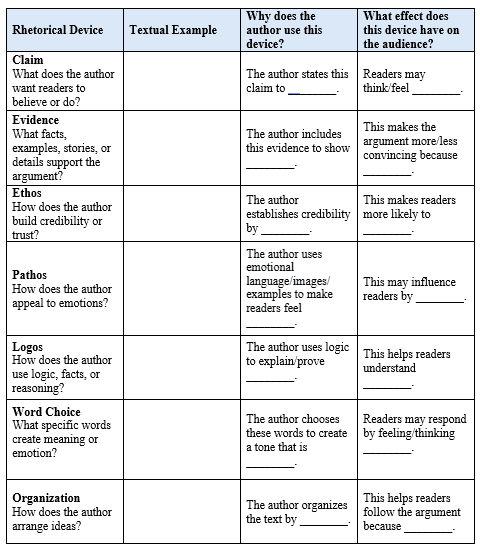
Use a rhetorical analysis chart:
After completing the chart, respond:
1. What is the author’s strongest rhetorical strategy? Why?
The author’s most effective strategy is __________________ because
__________________ .
2. How does the author attempt to influence the audience?
The author influences readers by __________________ .
3. How effective is the overall argument?
The argument is effective/not effective because __________________ .
Writing Supports
Provide a rhetorical analysis essay structure:
Introduction
- Identify the text, author, and argument.
- State the rhetorical strategies being analyzed.
Body Paragraph 1
- Identify a rhetorical strategy.
- Provide evidence.
- Explain the effect on the audience.
Body Paragraph 2
- Identify another rhetorical strategy.
- Provide evidence.
- Explain effectiveness.
Conclusion
- Evaluate the overall effectiveness of the argument.
💡 When analyzing texts about animals, ELLs and MLLs may especially benefit from:
- Previewing key concepts (e.g., speciesism, ethics, exploitation, compassion).
- Providing images or real-world examples before reading.
- Allowing students to connect ideas to experiences from their own communities and lives.
- Emphasizing that rhetorical analysis focuses on how an argument is made, not requiring students to agree with the argument
🐀 Unit: Critical Thinking & Argumentative Writing
This critical thinking, reading, and writing unit guides students through an inquiry-based study of animal testing (vivisection) while building research, analytical, and argumentative writing skills. Animal testing is a consistently high-interest topic for secondary students. In fact, TeachKind receives numerous inquiries from students each year about this issue, demonstrating a strong desire to learn more about the scientific, ethical, and societal questions surrounding animal experimentation. Learners will be motivated to evaluate evidence, consider multiple perspectives, and develop well-supported arguments.
There’s no need to be an expert on animal testing. We’ve provided all the resources to engage students on this issue.
💡 Teacher Tip: This full-unit toolkit is designed to be flexible, so use as many components as your curriculum and schedule allow. Whether you implement the entire inquiry sequence or select individual films, readings, and discussion prompts, each activity builds students’ critical thinking, evidence evaluation, and communication skills.
🔢 Unit Scope and Sequence
🎥 Film
The unit opens with students viewing videos that introduce the topic of animal testing, and provide essential background knowledge.
📚 Reading
Students will deepen their understanding of animal testing by reading and annotating a variety of informational articles, while considering this essential question: Is it ethical to use animals for experiments when effective and humane non-animal methods exist?
🗣️ Interview an Expert Scientist
Students are invited to interview a scientist to explore scientific and ethical perspectives firsthand.
✍ Summative Argumentative Essay
Using the evidence they have gathered throughout the unit, students write a summative argumentative essay that addresses the unit’s essential question: Is it ethical to use animals for experiments when effective and humane non-animal methods exist?
🐸 Student Calls to Action
Following the essay writing assignment, students can extend their learning beyond the classroom by choosing from a variety of real-world calls to action, inviting them to apply their knowledge and communicate their ideas in meaningful ways.
➕ Additional Resources
Incorporate additional resources throughout the unit to enrich classroom discussions, extend student learning, and provide opportunities for further exploration of animal testing and humane alternatives.
💡As you open the unit, let students know that they will be working toward addressing the following essential question: Is it ethical to use animals for experiments when effective and humane non-animal methods exist?
🎥 Film
✅ Pre-Writing Prompts: Before Viewing the Films
- What do you already know about animal testing? Where have you learned about it?
- Why do scientists conduct research before new medicines or products are used by humans?
- What questions do you have about the use of animals in experiments?
- What information would you need before deciding whether animal testing should continue or be replaced?
✅ Discussion or Writing Prompts After Viewing the Films
- What new information surprised or challenged your thinking?
- Which examples or stories had the greatest impact on you? Why?
- What claims did the films make about animal experimentation?
- What evidence was presented to support those claims?
- What additional questions do you still have?
📚 Reading
- Article: “The Silver Spring Monkeys: The Case That Made History for Animals” (with vocabulary and comprehension questions)
✅ During the Reading and Research
As students read the articles and debate materials, they will take notes that are intended to support them with answering the unit’s essential question:
Is it ethical to use animals for experiments when effective and humane non-animal methods exist?
Consider the following:
- What claims are commonly given for animal experimentation?
- What arguments support replacing animal experimentation?
- Which pieces of evidence are the strongest? Why?
- Which sources seem the most credible?
- What ethical issues are raised?
- What scientific issues are raised?
- What new options have emerged to replace animal testing in recent years?
What evidence would best convince someone who disagrees with your position?
🗣️ Interview an Expert
We are happy to coordinate a free virtual presentation and interview with your students on the ethical problems and ineffectiveness associated with animal experimentation with Dr. Katherine Roe or Dr. Lisa Jones-Engel. ➡️ Request a Speaker
✅ To prepare an engaging, accurate presentation for your students, please:
- Request at least two weeks in advance whenever possible.
- Tell us about your class, curriculum, and learning goals.
- Prepare students by having them research the speaker and topic, and have the class develop 5-10 thoughtful interview questions.
- Send student questions or specific topics to us in advance, when possible. We will send these questions to the scientist.
- Prepare students for the format, participation expectations, and potentially sensitive subject matter.
🧠 Dr. Katherine Roe | ➡️ Request a Speaker
A neuroscientist and the chief of the Science Advancement & Outreach division at PETA, Dr. Katherine Roe speaks to the inefficacy of animal experimentation, as well as the suffering experienced by animals used in experiments. Her presentations are favorites among teachers and students because of her vast knowledge in the field of animal experimentation. She’s available to present virtually to all grade levels.
🐵 Dr. Lisa Jones-Engel | ️➡️ Request a Speaker
Primatologist Lisa Jones-Engel, Ph.D., has spent more than three decades inside the primate research system as a field primatologist, a primate scientist, a Fulbright scholar, and a member of a university animal research oversight committee. Having studied the human-primate interface for 36 years, her scientific career has spanned the field, the research laboratory, and the undergraduate classroom. She serves as senior science adviser on primate experimentation with PETA’s Laboratory Investigations Department. She’s available to present virtually to all grade levels.
✍🏽 Summative Argumentative Essay
Throughout this unit, students will have viewed documentaries, analyzed informational texts, evaluated evidence, explored multiple perspectives on animal testing, and possibly interviewed an animal testing scientific expert.
Using evidence from the sources studied, students will write an argumentative essay responding to the following question:
Essay Prompt: Is it ethical to use animals for experiments when effective and humane non-animal methods exist?
Students are to develop a clear, defensible claim and support it with relevant, credible evidence from multiple sources. They will explain how the collected evidence supports their reasoning, acknowledge at least one opposing viewpoint, and respond to it thoughtfully before concluding their argument.
Before Writing
Plan the essay writing:
- What is your claim?
- Which three to five pieces of evidence best support your claim?
- What counterargument should you address?
- How will you respond to that counterargument using evidence?
- What conclusion do you want readers to reach?
Essay Requirements
- Introduce a clear claim.
- Use evidence from multiple unit sources.
- Explain how the evidence supports the student’s argument.
- Address at least one counterclaim.
- Maintain a formal, objective tone.
- Use transitions to connect ideas.
- End with a thoughtful conclusion that reinforces the argumentative position.
Post-Writing Reflection Prompts
Choose three or more prompts to reflect upon.
- How did your thinking about animal testing change during this unit?
- Which source most influenced your thinking? Why?
- Which piece of evidence was the strongest in supporting your argument?
- How has this unit changed the way you evaluate the effectiveness of animal testing?
- What did you find most compelling about the case for replacing animal experimentation with animal-free research methods?
- What actions can individuals take if they want to support the use of cruelty-free products?
➕ Additional Resources
- Article: “The Hidden Health Crisis in Animal Testing Facilities”
- The Devil’s Dictionary: Experimenters’ Euphemisms Camouflage Cruelty
- Cruelty-Free Cosmetics, Personal-Care Products, & More
- Portraits from the Lab: Art & testimony confronting the human and animal cost of experimentation
🐸 Student Calls to Action to End Animal Testing
⭐ Get your science teachers to use Kind Frog
⭐ Leaflet
⭐ Write to your legislators
⭐ Sign PETA petitions
⭐ Urge testing labs to close
🌏 Support for Multilingual Learners (ELLs/MLLs)
Animal testing is a high-interest topic that encourages discussion and gives multilingual learners meaningful opportunities to develop academic language through listening, speaking, reading, and writing. By scaffolding vocabulary, providing structured discussion opportunities, and modeling evidence-based argumentation, teachers can help all students participate confidently in the inquiry process.
Build Background Knowledge
Before viewing the films or reading the articles, introduce key academic and scientific vocabulary such as:
- animal testing (vivisection)
- humane research methods
- ethics
- evidence
- claim
- counterclaim
- credible source
- alternative methods
Encourage students to create a vocabulary journal that includes definitions, illustrations, examples, and translations in their home language when appropriate.
Support Film Viewing
- Preview the essential question before each video.
- Pause periodically to clarify vocabulary and check for understanding.
- Have students complete a simple note-catcher with prompts such as:
- One new fact I learned…
- One question I still have…
- One piece of evidence I noticed…
Scaffold Reading
- Pair multilingual learners with supportive peers for partner reading.
- Chunk longer texts into manageable sections.
- Model annotation by identifying one claim and one piece of supporting evidence together before students work independently.
Structured Academic Discussion
Before whole-class discussions, give students time to discuss ideas with a partner using sentence frames such as:
- I agree with _____ because…
- One piece of evidence is…
- Another perspective is…
- I respectfully disagree because…
- The author argues that…
- This evidence suggests…
Scaffold the Argumentative Essay
Provide students with an outline or graphic organizer that includes:
- Claim
- Evidence 1
- Evidence 2
- Evidence 3
- Counterclaim
- Response to the counterclaim
- Conclusion
Offer sentence starters such as:
- I believe…
- According to…
- This evidence demonstrates…
- Some will argue…
- However…
- Therefore…
Differentiate as Needed
Allow students to demonstrate understanding through a combination of discussion, graphic organizers, annotated texts, oral explanations, and writing. As language proficiency develops, gradually reduce scaffolds while maintaining opportunities for students to analyze evidence, justify their reasoning, and communicate their ideas using academic language.
Stay inspired with free classroom resources that make literacy and SEL come alive. Sign up for TeachKind emails!
By submitting this form, you’re acknowledging that you have read and agree to our privacy policy and agree to receive emails from us.